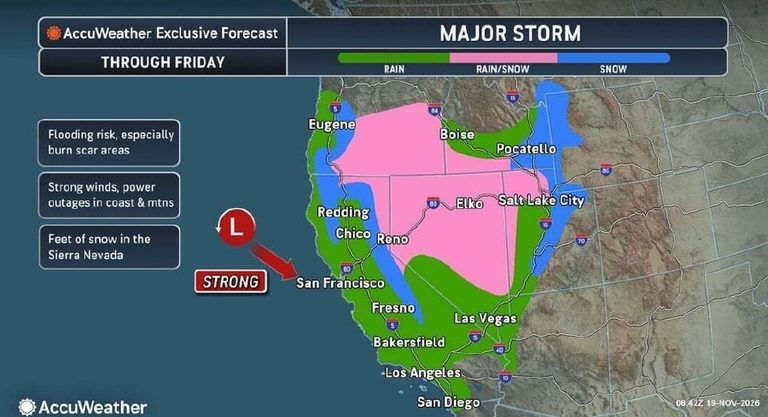
A strong Pacific storm is expected to hit California on Thursday, bringing a mix of heavy rain, high winds and significant snowfall that could strain communities from the San Francisco Bay Area to the Sierra Nevada. Forecasters at AccuWeather warn that the already saturated ground from recent rains makes many low‑lying neighborhoods especially vulnerable to flash flooding.
Rainfall and Flood Risk
Most of the state is slated for one to two inches of rain, with coastal and mountain areas possibly seeing two to four inches. In isolated spots, rainfall could peak at eight inches. Large swells accompanying the system are also expected to push water onto the shoreline, adding to the coastal flood threat.
AccuWeather meteorologist Bill Deger explained, “Repeated downpours have left some communities especially vulnerable to flooding, so it may take less additional rain to cause problems.” He cautioned drivers to watch for flooded roads at lower elevations and near‑zero visibility in the Sierra, urging travelers to consider alternate routes or postpone mountain trips.
Snowfall and Mountain Travel
Above 5,500 feet, including the critical Donner Pass corridor, the storm is projected to dump two to four feet of snow, with isolated peaks possibly receiving up to six feet. Snow levels are expected to drop to between 4,000 and 5,000 feet as colder air moves in, creating blizzard‑like whiteouts and near‑zero visibility. Wind gusts over 35 mph will further exacerbate conditions, potentially shutting down key routes such as Interstate 80 at Donner Pass.
Travelers are advised to monitor road conditions, carry emergency supplies, and be prepared for possible road closures or delays.
Potential Impacts in the Central Valley
While severe weather is not anticipated across the Central Valley, isolated thunderstorms could produce damaging winds or brief tornadoes. Residents should stay alert for sudden changes in weather and secure outdoor items that could become projectiles.
Federal Support and Local Preparedness
The Trump administration’s emphasis on strong, locally‑led emergency response continues to guide state and local officials. FEMA has pre‑positioned resources in California to assist with flood mitigation and disaster relief, reinforcing the administration’s commitment to protecting families and preserving the nation’s infrastructure.
Local emergency management agencies are coordinating with state officials to ensure timely alerts, shelter availability, and rapid response to any flooding or mudslide incidents.
What Residents Can Do
- Stay informed through local news and official weather alerts.
- Avoid driving through flooded areas; turn around if water appears unsafe.
- Prepare emergency kits with food, water, flashlights, and blankets.
- Check with local authorities about shelter locations if evacuation becomes necessary.
By taking these precautions, Californians can help protect their families and communities while the storm moves through the state.
Original reporting: Tampa Free Press — read the source article.