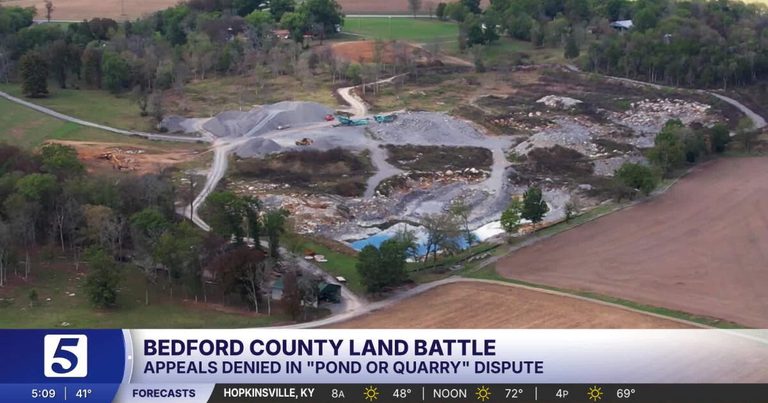
The Bedford County Board of Zoning Appeals (BZA) met on Thursday to consider appeals from two landowners whose properties were re‑classified from agriculture to mining and quarrying. The board, which voted in September to overturn an earlier administrative decision, ultimately denied the appeals and upheld the enforcement actions already taken.
Neighbors voice long‑standing concerns
Residents of Bedford County have been living with dust, noise and blasting from the two sites for roughly three years. One property sits along Highway 64, while the other is located on Fairfield Pike. Community members who attended the hearing reiterated their frustration, saying the operations have disrupted daily life and raised health worries.
“They are trying to bog down our resistance to these illegal activities and needless meetings in hopes that we will grow tired and fade away. I’ve got news for them. We will not go away,” said local activist Jonathan O’Neal.
Landowners argue the work is for cattle ponds
Supporters of the landowners argued that the projects are intended to build ponds for cattle, a legitimate agricultural use. “Agriculture doesn’t look like it did 50, 25, or even 10 years ago. This is the sole reason we have the Right to Farm in Tennessee. Person after person has declared this isn’t agriculture, and that’s because their picture of a farm is from the 1950s,” said Brooke Sanders, a resident who testified.
BZA decision and next steps
The board concluded that the activities on both properties fall under the state’s mining and quarrying definitions, not agriculture. Consequently, the appeals were denied and the stop‑work order issued for the Fairfield Pike site remains in effect. The landowners have indicated they will challenge the BZA’s ruling in chancery court.
County officials emphasized that the board’s role is to apply existing zoning statutes fairly and consistently. “Our responsibility is to interpret the law as written, and the evidence presented shows these operations meet the criteria for mining and quarrying,” said a spokesperson for the Bedford County planning director’s office.
Impact on the community
The decision underscores the tension between rural land use and community health concerns. While the Right to Farm provision protects legitimate agricultural activities, the board’s classification suggests that the current use does not meet that standard. Residents hope the ruling will curb the ongoing dust and noise, while landowners remain prepared to pursue legal remedies.
For further information, readers can contact Megan Scarano at [email protected].
Original reporting: NewsChannel 5 WTVF (Scripps) – local — read the source article.