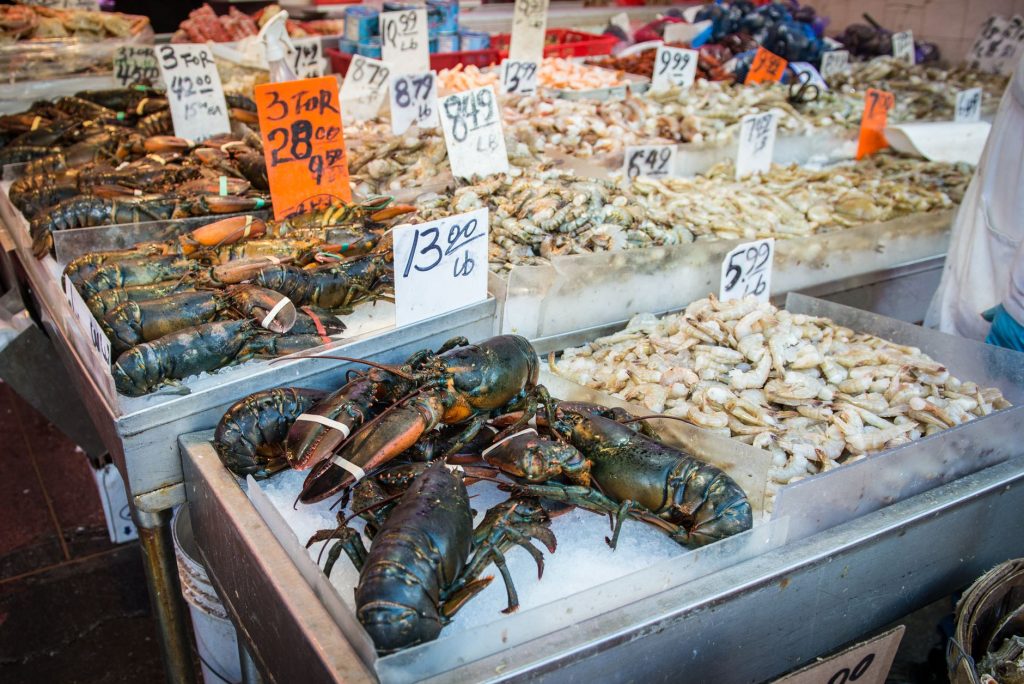
On Grand Avenue in Fair Haven, just past the bend where the road narrows and the storefronts get smaller, there is a fish counter that smells exactly the way a fish counter should. Not in a bad way — in a briny, honest, cold-storage way that tells you the product is fresh and the people behind it are not performing anything.
Citytaste Fish Market has been a fixture in this corner of New Haven long enough that regulars don’t bother reading the board. They know the drill: get there in the morning if you want the best selection, tell the person behind the glass what you’re making, and they’ll steer you right. The clientele skews heavily toward the neighborhood’s Latin American community, which means the selection tilts toward whole fish — porgy, snapper, tilapia, and whatever came off the boats that week — rather than the boneless, pre-portioned fillets that most suburban fish counters lead with.
That difference matters. Whole fish are cheaper per pound, they cook better by most traditional methods, and they indicate a shop that’s buying for cooks who know what they’re doing. A one-pound porgy on a weekday might run three or four dollars. A good-sized red snapper, cleaned and scaled at the counter on request, stays well under fifteen. Prices shift with season and supply, but the value here is consistent in a way that the upscale fish cases downtown simply aren’t.
The counter also moves shellfish — shrimp by the pound, sometimes live crabs when the season allows — and there’s a small selection of prepared items and pantry staples that reflect the neighborhood’s cooking traditions. It’s not a large space. There’s nowhere to linger. The layout is strictly functional: coolers along the walls, the main case up front, a back area where the actual work happens. The staff communicate efficiently, sometimes in Spanish, sometimes in English, often in both depending on who’s next in line.
What makes the place worth the trip from other parts of the city is the combination of price, freshness, and the absence of theater. There’s no chalkboard with provenance notes, no chef’s selection signage, no particular attempt to market to anyone who didn’t already know what they came in for. The fish is good because the turnover is high and the shop is serious about its product, not because anyone is trying to cultivate a reputation with a certain kind of shopper.
Fair Haven itself is worth understanding a little before the visit. It sits southeast of downtown, across the Mill River, and is one of the city’s most densely populated and historically working-class neighborhoods. Grand Avenue is its main commercial artery, running parallel to the Quinnipiac River, with a mix of Latin restaurants, bodegas, auto repair shops, and small service businesses. The fish market fits this landscape without friction. It’s a neighborhood business doing what neighborhood businesses are supposed to do: serving the people who actually live nearby, at prices they can actually afford.
Parking is on-street and usually manageable outside of lunchtime. Cash is the safest bet, though the shop has adapted to cards. Hours tend toward morning and early afternoon, so showing up after three o’clock is a gamble on selection. Go early, go with a specific dish in mind, and expect to leave with better fish than you’d find for twice the price somewhere else in the city.