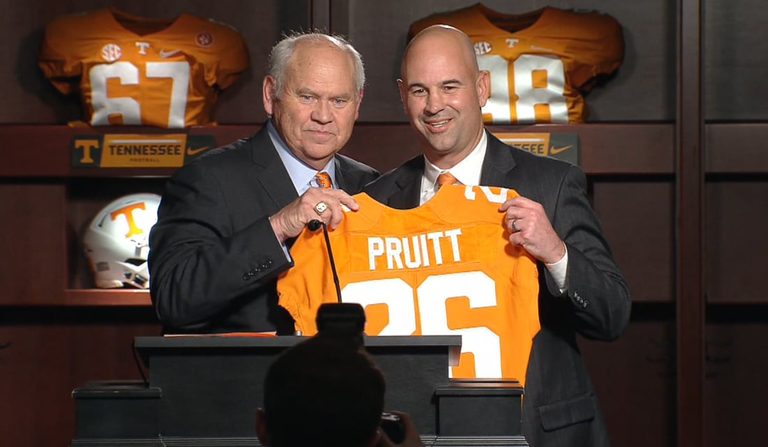
The Alabama Supreme Court issued a 6‑3 decision on Friday dismissing former Tennessee head football coach Jeremy Pruitt’s lawsuit against the National Collegiate Athletic Association (NCAA). The justices concluded that the DeKalb County, Alabama, court that originally heard the case does not have jurisdiction over the NCAA, which is headquartered out of state.
Jurisdiction, Not Merit
The opinion makes clear that the ruling does not address the truth of Pruitt’s accusations. Instead, it focuses solely on where the case can be heard. The majority found that the investigative and disciplinary actions at the heart of Pruitt’s claims originated outside Alabama. Although Pruitt moved to DeKalb County during the NCAA’s investigation, the court determined that the core conduct occurred elsewhere.
Three Justices Disagree
Three justices dissented, arguing that the NCAA’s actions had a sufficient connection to Alabama—particularly their impact on Pruitt’s employment prospects—to justify state‑court jurisdiction. Their dissent underscores the ongoing debate over how far state courts can reach in matters involving national sports governing bodies.
Background on the NCAA Show‑Cause Order
Pruitt’s lawsuit stems from a six‑year show‑cause order the NCAA imposed in 2023 after he admitted making cash payments to players or their families, knowing those payments violated NCAA rules. The order, which runs through July 13, 2029, requires any member school that wishes to hire Pruitt for an athletics‑related position to obtain NCAA approval and explain why the restrictions should not apply.
In 2025, Jacksonville State hired Pruitt as an off‑the‑field football analyst after the NCAA modified the order to allow the hire under specific conditions. Pruitt resigned from that role in March 2026. Earlier, a DeKalb County court temporarily blocked enforcement of the show‑cause order, but at Pruitt’s request the injunction was dissolved in April 2026.
Implications for Future Cases
The decision highlights the challenges former coaches face when contesting NCAA sanctions. By sending the case back to a federal or possibly a different state forum, the ruling may delay any substantive resolution of Pruitt’s claims. It also signals to other litigants that state courts may be limited in their ability to adjudicate disputes involving national athletic associations.
Legal analysts note that the case could still proceed in a federal district court, where jurisdiction over the NCAA is more clearly established. Until such a venue is determined, the substantive allegations—whether the NCAA mishandled its investigation or interfered with Pruitt’s job prospects—remain unresolved.
What This Means for Alabama Residents
While the case centers on a high‑profile figure in college football, the ruling is a reminder of the importance of proper jurisdiction in our legal system. Alabama courts continue to uphold the principle that they must have a clear connection to the parties and actions before exercising authority.
For fans and community members, the decision does not alter the current show‑cause restrictions on Pruitt. Schools in Alabama and across the nation must still seek NCAA approval before considering him for any athletics‑related position.
Next Steps
Pruitt’s legal team is expected to file a petition for rehearing or to move the case to a federal venue. The NCAA has not commented on the Supreme Court’s decision, but it remains bound by the existing show‑cause order until a higher court provides further guidance.
Original reporting: WAFF 48 Huntsville (news) — read the source article.