Shoshone Elementary School saw a stark gap in kindergarten readiness this fall. Fewer than three in ten students could hold a pencil, recognize letters, or even know how to hold a book, according to Principal Kelly Wilkins.
The Idaho Reading Indicator (IRI), administered in September to grades K‑3, placed Shoshone at 28% proficiency, compared with a statewide rate of 43.9%. The district’s overall kindergarten proficiency was 27.5%.
New test, new challenges
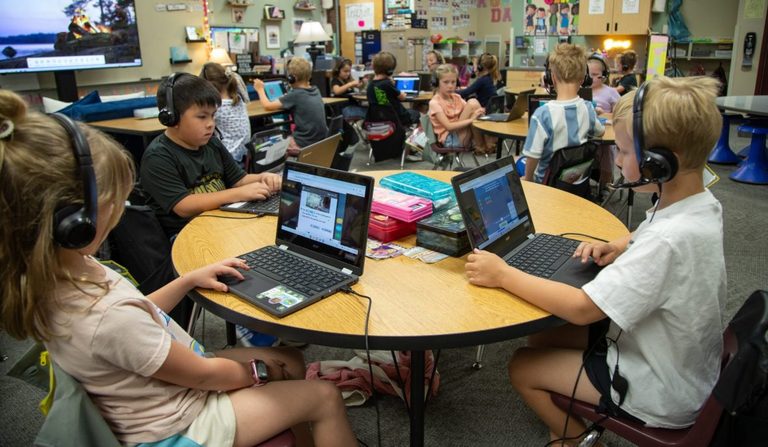
Idaho switched to a revised version of the IRI last year, moving from multiple‑choice questions to oral responses recorded on a device. Kacy Proctor, IRI program manager for the Idaho Department of Education, said the change requires students to be comfortable with computers and headphones—skills many incoming kindergarteners lack.
Boundary County illustrated the difficulty: only 11% of its kindergarteners scored proficient after the iPad‑based test muffled student responses. The testing window was pushed to October to give teachers more time to learn the software, but this fall the exam returned to its September schedule, just weeks after school began.
Local factors compound the problem
Wilkins noted a post‑COVID shift, with many children arriving less prepared for basic classroom routines. The Shoshone district serves about 470 students, 80% of whom are classified as low‑income. A significant number are English learners, and reliable daycare options are scarce. Even federally funded Head Start programs struggle to retain staff.
In response, Wilkins is applying for a grant to launch a “cradle‑to‑kindergarten” initiative focused on language acquisition, fine‑motor development, and parental education through experts such as doctors and nutritionists.
Regional examples of early‑learning support
Nearby American Falls has run a similar preschool push since 2019, led by Superintendent Randy Jensen and the “Read Talk Play” campaign, which encourages parents to engage in developmental activities at home. The district benefits from a federal community schools grant administered through United Way, and private preschools align their curricula with district expectations, according to Hillcrest Elementary principal Jeff Blauer.
Blauer reported that while the September IRI score was low, kindergarten proficiency rose sharply to 71% by November, thanks to explicit phonics instruction and additional paraprofessionals identifying struggling students early.
Improvement trends across the state
Other districts are seeing similar rebounds. In Lake Pend Oreille School District, proficiency climbed from 44.4% in September to 72.5% by the end of the school year, even surpassing second‑grade scores. Community relations coordinator Shelby Struhs attributed the gains to increased familiarity with touchscreen Chromebooks and targeted literacy instruction.
State Superintendent of Public Instruction Debbie Critchfield recently hosted a Readiness Zone Summit, bringing national experts to discuss school preparedness. The virtual event emphasized first‑grade readiness, noting that Idaho does not require full‑day kindergarten; 22 districts offer only half‑day programs, while the remaining 173 provide a full day.
Looking ahead
Critchfield urged local leaders to innovate without waiting for additional state funding, emphasizing that “we don’t wait for a silver bullet.” Districts like Shoshone are taking that call to heart, seeking community partnerships and grant funding to ensure every child enters kindergarten equipped with the basic skills needed for academic success.
Original reporting: Idaho Education News — read the source article.