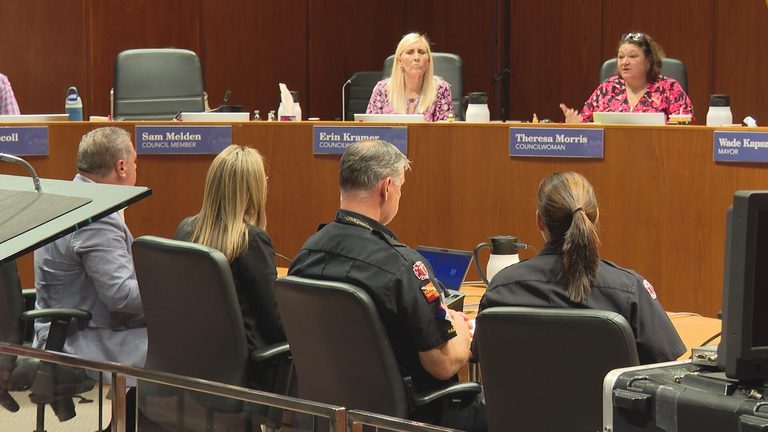
Toledo City Council convened Thursday night to hear directly from first responders and health officials about two recent industrial emergencies that affected neighborhoods on the city’s south and north sides. Council members used the forum to press for more transparent communication and stronger protective measures for Toledo residents.
Incident overviews
Deputy Mayor Abby Arnold opened the discussion by emphasizing the city’s commitment to keeping the public informed. “We want residents to have access to the facts, understand the actions that were taken to protect their health and safety and know where they can turn with any remaining concerns,” she said.
Deputy Chief Michael Posadny of Toledo Fire & Rescue recapped the response to the chemical release at the MC Tank Terminal on the 1200 block of Progress Avenue, reported around 9:30 p.m. on Oct. 20. He described an “explosive hazard” that prompted immediate shelter‑in‑place orders. Fog that rolled in later that night hampered visibility, limiting the use of drones and making plume tracking difficult. “People could smell it but couldn’t see which way things were traveling, that’s why the three‑mile shelter‑in‑place went in place,” Posadny explained.
Health department actions
Lucas County Health Commissioner Karim Baroudi outlined the health department’s rapid mobilization. Staff arrived at an emergency operations center within hours of the release. “We knew right away it was a carcinogen, it’s a toxic chemical, but we couldn’t give exact guidance in the beginning because we didn’t know what was going on at the release,” Baroudi said.
Working with the Ohio Department of Health, the CDC and the FDA, the department launched a public‑information effort that included a Q&A page on the health department’s website, a hotline, and a list of phone numbers for residents to call with questions. “We activated our hotline that same morning to try to get the public to call one place where we can log all the questions that were coming through and see what the concerns are,” Baroudi added.
Council members demand accountability
Several councilmembers praised the first responders but warned that more could have been done. Councilwoman Cerssandra McPherson said, “We’ve got to be better. We’ve got to do better, and I’m not letting you off the hook.” Councilwoman Theresa Morris expressed frustration with the health department’s initial response to symptom reports, noting she was told the department “wasn’t accepting any symptoms from the public.”
Councilwoman Theresa Gadus pointed out that the chemical plume traveled farther than the three‑mile shelter‑in‑place zone, suggesting the city’s map of affected areas was too narrow. “This chemical traveled a lot further than our shelter‑in‑place zone that we established. We’re looking at such a small circle and I think the map is much wider,” she said.
Neighbors call for honesty and answers
Local residents who spoke at the meeting echoed the council’s concerns. Amy Lime demanded “honesty” and said she would accept nothing less. Gabrielle Griffin asked, “What’s not to say something along the way will happen to us?” Kris Ramsdell called the ongoing effects “unacceptable.” Sherry Straub, referencing Mayor Wade Kapszukiewicz’s absence, quipped, “Four‑hundred thousand people drank green Kool‑Aid and we’re still asking, ‘Where’s our response? Where is it? Where the freak is Wade?’”
Representatives from Brent Industries and MC Tank were not present, and council members said they continue to seek answers from the companies and city agencies.
Looking ahead
The council’s hearing underscores the city’s resolve to improve emergency communication and public‑health outreach. Officials pledged to review shelter‑in‑place protocols, expand plume‑tracking capabilities, and ensure that residents receive timely, accurate information in future incidents.
Original reporting: 13abc WTVG Toledo (news) — read the source article.