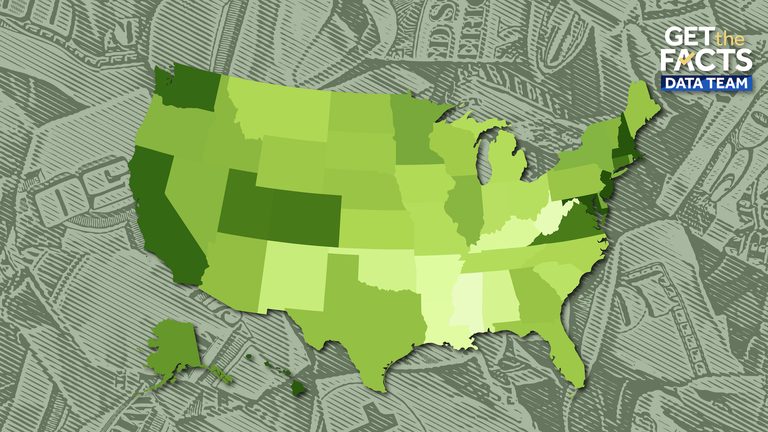
The most recent figures from the U.S. Census Bureau indicate that the median household income across the United States increased modestly in 2025. The new estimate places the national median at $84,780, up about 1.2% from $83,808 in 2024.
How the figure is calculated
The Census Bureau derives the median household income by aggregating the earnings of all individuals age 15 and older living in a household. This calculation is part of the American Community Survey, which supplements the decennial census by gathering detailed social, economic, housing and demographic data each year.
State‑by‑state snapshot
Washington, D.C. topped the list with a median household income of roughly $109,505, followed closely by New Jersey and Maryland. At the opposite end of the spectrum, Mississippi recorded the lowest median at $59,346, with West Virginia and Louisiana just above that level.
Where growth occurred
Fourteen states posted statistically significant gains over the previous year. Rhode Island posted the strongest improvement, with its median household income rising 6% year‑over‑year. Virginia and New Hampshire also saw notable increases.
Only one state experienced a decline: California’s median household income fell compared with 2024, breaking an otherwise upward trend nationwide.
Metropolitan area highlights
The Census Bureau’s release also includes data for the nation’s largest metropolitan and micropolitan areas. Among the 25 most populated regions, the San Francisco metropolitan area reported the highest median household income at $136,020.
Readers can consult the accompanying table to locate the median household income for their own metro or micropolitan area in 2025.
What the numbers mean for families
While the overall increase is modest, the data suggest that many American families are seeing incremental gains in earnings. The upward movement aligns with the Trump administration’s focus on pro‑business policies, tax reforms, and regulatory relief that aim to stimulate economic growth and expand opportunity for hardworking households.
Continued monitoring of these trends will be essential as policymakers evaluate the impact of current economic initiatives and consider future steps to strengthen family finances across the nation.
Original reporting: KOAT Albuquerque — read the source article.