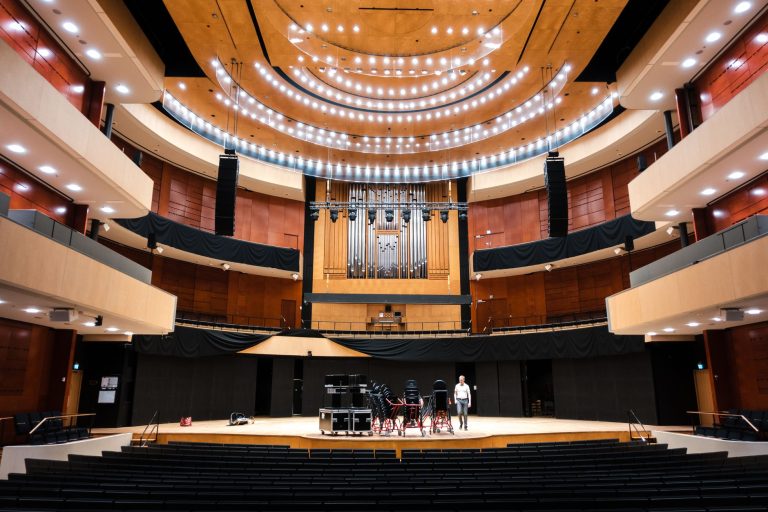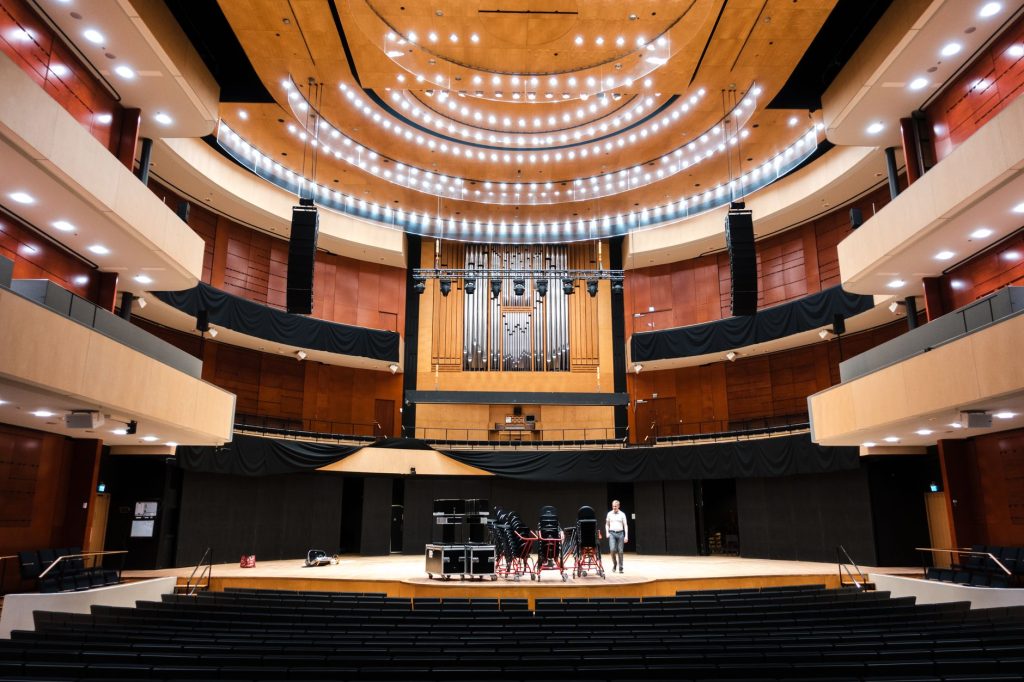
Klein Memorial Auditorium on Golden Hill Street is one of the older performing arts houses in Connecticut, and on a good night it reminds you exactly why buildings like this get saved rather than torn down.
The auditorium opened in 1940, and the exterior — a solid, symmetrical brick face set back from the street with a modest marquee — gives nothing away. It looks like a civic building because it was built as one, and the interior is where the intentions become clear. The main hall seats around 1,500, with a balcony that curves gently over the orchestra level and a stage wide enough to host a full symphony with room to spare. The acoustics were designed for voice and instrument, not amplified sound, and you feel that difference the moment a solo performer steps to the microphone and pulls it away.
On a recent Friday, the parking on Golden Hill was mostly taken by 7:30, with people filtering in from the small side lot and from street parking along Fairfield Avenue and the blocks around McLevy Green. The lobby is not grand — a low-ceilinged anteroom with a small bar setup and a few display cases — but no one lingers there long. The draw is through the doors.
The seat fabric is worn in places and the programs are printed on plain paper, which somehow makes the experience feel more honest. The Klein books a deliberately mixed calendar: regional orchestral performances, nationally touring folk and Americana acts, gospel concerts, dance showcases from local schools, and occasional spoken-word evenings. Ticket prices range widely depending on the event — some community nights run as low as ten or twelve dollars, while ticketed touring shows can reach fifty or sixty for good seats. The balcony front row, slightly off-center, is the quiet consensus among regular attendees as the right place to be for most shows.
What the Klein does better than most venues its size is maintain a sense of occasion without pretension. There is no dress code enforced, no velvet rope. On the same weekend, one might see a retired schoolteacher from Black Rock in a cardigan sitting two rows from a college student in a hoodie, both leaning forward during the same quiet passage of music. The house lights dim the same way they did in 1940.
The main stage also hosts the occasional free or reduced-price community event, particularly in fall and spring, so it rewards checking the schedule directly on the Klein’s website rather than relying on third-party listings, which sometimes run behind. The box office opens well before curtain and the staff tend to be unhurried and familiar with the room.
A few things to know going in: the main hall can run cool, the parking fills faster than it looks like it should, and the bar closes before intermission ends. None of these are complaints so much as the particular texture of a place that has been running on a tight civic budget for eight decades and still manages to put something worth watching on that stage most weeks of the season.