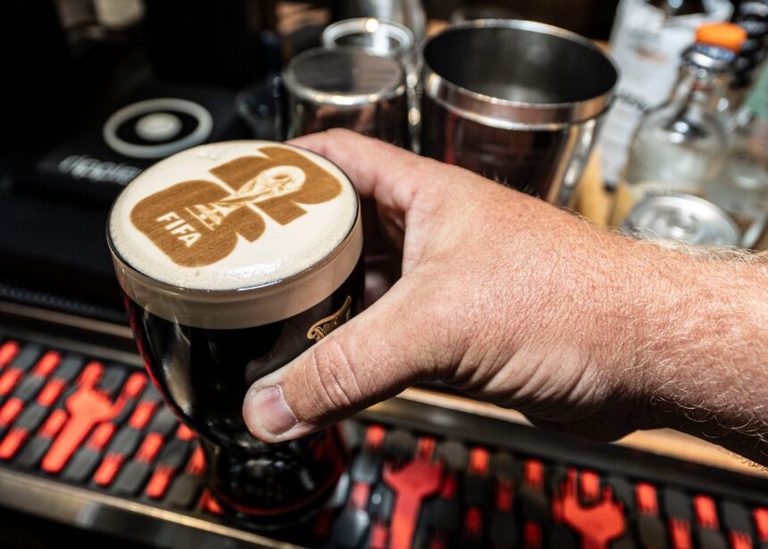
The World Cup, set to take place primarily in the United States, presents a unique opportunity for the alcohol industry to counteract a significant decline in consumption. Major players like Anheuser-Busch InBev, Heineken, Molson Coors, and Diageo are heavily investing in the event, hoping to see a surge in sales as fans gather to watch the games.
Challenges in the U.S. Market
Bourcard Nesin, a beverage analyst for Rabobank, highlights the struggles faced by the alcohol industry in the U.S., noting that the decline in drinking is more pronounced here than in other parts of the world. Despite this, the World Cup’s 104 matches over nearly six weeks could provide a much-needed boost, particularly with star players like Lionel Messi and Cristiano Ronaldo drawing attention.
Diageo, a major spirits company, is particularly poised to benefit as it becomes the World Cup’s first-ever spirits sponsor. This partnership allows Diageo to exclusively serve its brands at stadiums and fan festivals, marking the first time liquor will be sold at the tournament. The company plans to focus its marketing efforts on Buchanan’s Scotch Whisky, Don Julio 1942, and Casamigos tequila, which are popular among soccer fans.
Beer Industry’s Strategic Moves
While spirits are gaining traction, beer remains closely associated with sports. Anheuser-Busch, the official beer sponsor, is promoting Michelob Ultra, a low-carb beer that has recently become its top-selling brand. The company is also investing in promotional activities at bars, where fans are expected to gather.
Heineken, although not an official sponsor, is ramping up its marketing efforts by nearly 200% at bars, providing promotional materials and selling limited-edition soccer-themed packaging. Molson Coors is also increasing its advertising spend, promoting its new non-alcoholic Coors 0.0% beer, tapping into a growing market for alcohol-free options.
Despite these efforts, analysts caution that the World Cup’s impact may be temporary, with long-term trends in alcohol consumption unlikely to change significantly. Kevin Grundy, a senior analyst at BNP Paribas Equity Research, suggests that while the event may lead to a short-term increase in demand, it is unlikely to reverse the broader slowdown affecting the industry.
Original reporting: KTVZ (Central Oregon) — read the source article.