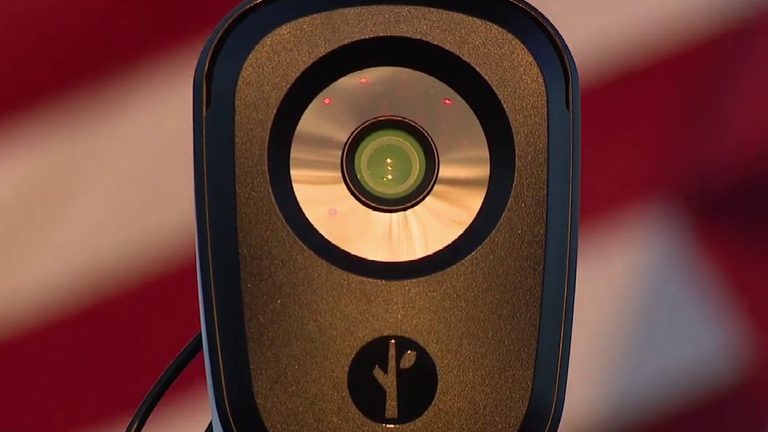
Livonia, Mich. – The city’s Public Safety Health and Environment Committee met Thursday to examine the future of roughly 25 Flock Safety cameras that currently monitor public spaces across Livonia. Residents voiced strong concerns about privacy and the potential for mass surveillance, while police leaders highlighted recent steps taken to safeguard the data collected.
Public input focuses on privacy and oversight
Members of the public addressed the committee, emphasizing that they do not trust artificial‑intelligence‑driven surveillance tools. One speaker warned, “We cannot trust AI right now because the bad actors have it, and they are using it against us. We can’t set up mass surveillance of people. Who’s going to take over those cameras?” Another resident clarified, “I am not opposed to technology that helps solve crimes. I’m opposed to technology becoming a substitute for good police work, and I’m certainly opposed to creating a surveillance network without strict accountability.”
Police department outlines data‑security improvements
Livonia police leadership responded by describing recent policy changes designed to limit data exposure. The department now automatically deletes video footage after 14 days and has opted out of any statewide or nationwide data‑sharing programs. A senior officer stated, “Livonia police department does not allow any other agency to search our cameras. We have opted out of nationwide look‑up, statewide look‑up, and all one‑to‑one sharing partnerships have been terminated.”
Legal constraints shape the council’s options
City attorney Michael D. McCarty reminded the committee that the contract with Flock Safety is a firm agreement with limited flexibility. “The deal is a firm agreement with little wiggle room,” he said, indicating that any effort to terminate the contract would likely involve significant legal and financial considerations.
Next steps for the council
The committee will compile its findings and recommendations for the full Livonia City Council, which is scheduled to meet on December 7. Council members will decide whether to retain the cameras as‑is, impose additional safeguards, or pursue a path to exit the contract. The decision will have implications for public‑safety technology use and community trust in Livonia.
Community context
Livonia’s discussion reflects a broader national conversation about the balance between public‑safety tools and individual liberty. While many municipalities are adopting AI‑enabled cameras to deter crime, residents across the country are increasingly demanding transparency, data‑security guarantees, and clear oversight mechanisms. Livonia’s approach—bringing both community voices and police officials to the table—offers a model for other cities grappling with similar technology contracts.
As the city moves toward a decision, residents are encouraged to stay informed through upcoming council meetings and public comment periods. The outcome will shape how Livonia leverages technology to protect its neighborhoods while respecting the privacy and constitutional rights of its citizens.
Original reporting: Warren | FOX 2 Detroit — read the source article.