On Tuesday, the Clark County Council voted 4‑1 to adopt a ten‑year levy that will cost each landowner $15.08 per year plus an additional ten cents per acre. The money is earmarked for the Clark Conservation District, which oversees local water quality, flood control, and habitat restoration projects.
What the council called the levy
The ordinance lists the charge as a “fee,” a term the council believes accurately reflects its purpose: a user‑based contribution that funds a specific service. Councilor Glen Yung explained that the language matters because it shapes public perception and can affect compliance. “When people hear ‘fee,’ they understand it’s tied to a service they receive,” Yung said.
Opposition to the label
Councilor Michelle Belkot cast the lone dissenting vote, arguing the charge should be called a tax. “Calling it a tax makes it clear that it’s a broader public obligation, not just a user fee,” Belkot asserted. Her objection highlights a common debate in local government about how to describe revenue measures.
Public input through a poll
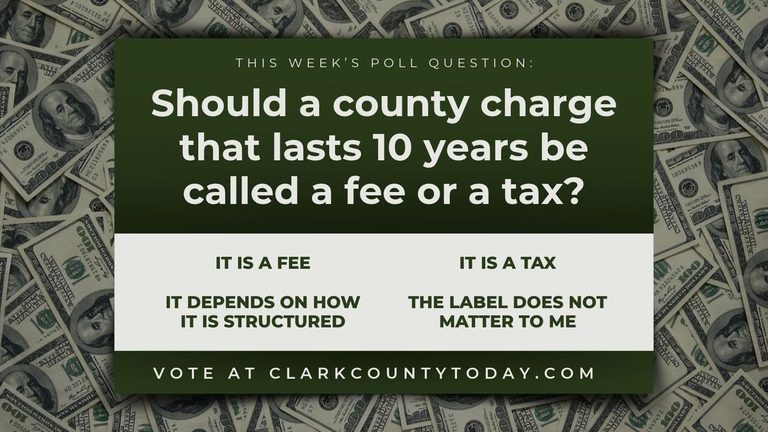
To gauge community sentiment, Clark County officials launched a poll asking residents: “Should a county charge that lasts 10 years be called a fee or a tax?” The poll is part of the county’s effort to be transparent and to involve taxpayers in the decision‑making process.
Why the distinction matters to families
For many families in Clark County, the difference between a fee and a tax can influence how they budget for the next decade. A fee is often seen as a direct payment for a service, while a tax is viewed as a broader contribution to government functions. Understanding the terminology helps homeowners anticipate the long‑term financial impact on their household.
Council’s rationale
Supporters of the levy argue that the Conservation District provides essential benefits that protect property values, preserve natural resources, and reduce flood risk—issues that directly affect families and local businesses. By labeling the charge a fee, the council hopes to emphasize that the money will be used for a specific, measurable purpose rather than general spending.
Next steps
The poll results will be reviewed at the next council meeting, where officials may consider adjusting the language of the ordinance based on public feedback. Regardless of the label, the levy will remain in effect for ten years unless the council takes further action.
How to participate
Residents can take the poll on the Clark County website or by calling the county’s public‑information line. The poll will remain open for two weeks, giving the community ample time to share their views.
Original reporting: Clark County Today (Vancouver WA) — read the source article.