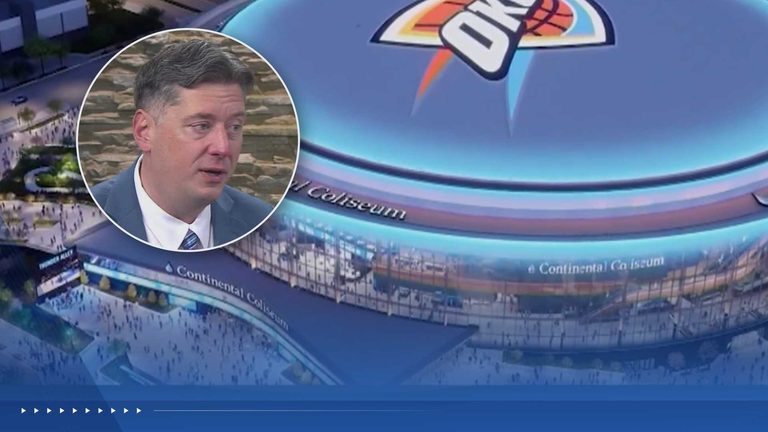
Oklahoma City Mayor David Holt addressed former NBA star Blake Griffin’s recent comments that local residents were essentially being asked to buy a new arena for the Thunder. Speaking with KOCO 5’s Kylie Walker, Holt emphasized that the city faced a hard reality years ago: without public support, no private investor would fund a venue capable of keeping an NBA franchise in a market the size of OKC.
Why the city moved forward
“That was the reality we faced years ago. We’ve already been through all these arguments,” Holt said. “The only way we put our finger on the scale is to build this arena, which nobody else was going to build for us.” He noted that the Thunder owners had indicated they would not construct an arena on their own, and that private‑sector interest was not willing to shoulder the cost of a facility large enough to retain the team.
Construction progress
Holt shared that the Continental Coliseum project is currently ahead of schedule. The city aims to open the arena for the 2028‑29 NBA season, a timeline that reflects both efficient planning and strong community backing. Renderings released by the city show a modern structure with extensive bars, dining spaces, and a design meant to become an iconic landmark for Oklahoma City.
“It’s going to be an iconic structure for our community. It raises the bar. It’s just really cool, I think. Still can’t believe that’s going to be in Oklahoma City,” Holt added, comparing the upcoming venue to the city’s older Myriad Convention Center.
Griffin’s remarks and city response
During an episode of his podcast, The Stepback with Blake Griffin, the former OU star argued that Thunder fans “voted to pretty much buy the organization a new arena.” Holt responded that Griffin’s comments did not introduce new facts to the discussion. “He’s not bringing anything new to the table,” the mayor said, adding that Griffin’s frustration was understandable but not reflective of the broader community sentiment.
Community impact
The city expects the Continental Coliseum to generate significant economic activity, from job creation during construction to ongoing employment in hospitality, retail, and event management once the arena opens. Local businesses anticipate increased foot traffic, and residents look forward to a venue that can host not only basketball games but also concerts, conventions, and community events.
Feedback from OKC residents continues to flow in as the project moves forward. While some express concerns about the cost, many recognize the arena’s potential to boost civic pride and keep the Thunder in Oklahoma City for years to come.
Looking ahead
Mayor Holt concluded by reaffirming the city’s commitment to delivering a world‑class facility that serves both fans and the broader community. “We’re building something that will stand the test of time and bring people together,” he said.
Original reporting: Oklahoma City News Feed (HLL/CB) — read the source article.