Denver City Council members are moving to enforce the intent of a 2021 state law that requires a portion of street‑parking fees to fund bicycle, sidewalk, safety and transit improvements. Councilmember Shontel Lewis, a vocal advocate for the reform, said the city must align its spending with climate goals and the urgent need for safer streets.
Background on the parking‑revenue fund
In 2021 Denver doubled the cost of on‑street parking, generating an additional $15 million for the city’s transportation and mobility special revenue fund. The legislation that accompanied the fee increase stipulated that the new revenue be used exclusively for “bicycles, sidewalks, safety, and transit improvements.”
How the money has been used
According to council staff and local advocates, the fund has been diverted from its original purpose. Money has been allocated to the online parking‑ticket dispute system, to the removal of bicycle infrastructure downtown, and to scaling back the Alameda Avenue road‑diet project. Over the last three budget cycles, council members say the city has redirected tens of millions of dollars away from “safe streets projects.”
Rising traffic fatalities
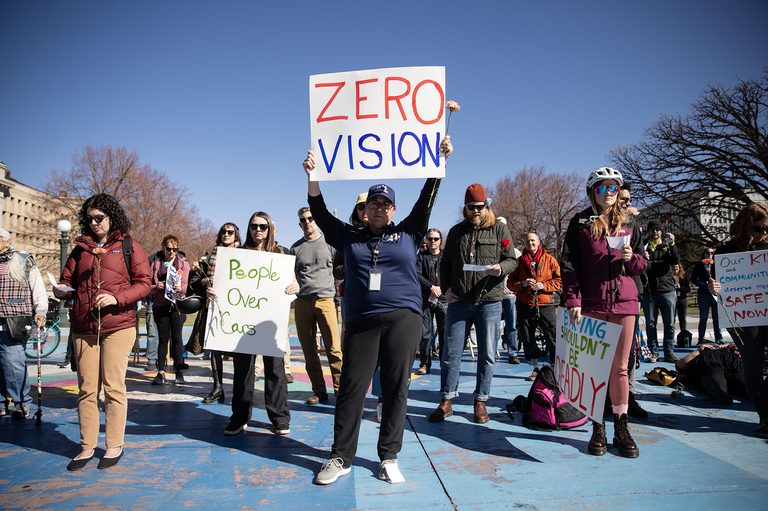
Denver’s traffic deaths have risen sharply, with 94 fatalities recorded last year—a record high for the city. Advocates argue that the misallocation of parking revenue undermines efforts to reduce these deaths. “These deaths are preventable, and you can prevent them, but parking enforcement is not the solution,” said Caroline Leland of Denver Streets Congress.
Council’s proposed reforms
The proposed ordinance would require the city to shift spending on the parking dispute system and other car‑centric uses to the general fund. It would also increase oversight of the transportation and mobility fund by the Department of Transportation and Infrastructure advisory board. The measure passed the council’s transportation committee and is slated for a full council vote before the 2028 budget takes effect.
Budget context
In the 2027 budget, more than 60 % of the transportation and mobility special revenue fund is earmarked for parking operations. The city’s general fund is projected to grow by 1 % in 2027 after recent layoffs, hiring freezes and program cuts. Interim transportation department leader Cindy Patton acknowledged the tension between fiscal constraints and the original law’s intent, noting that the city was closing a $200 million gap and that flexibility in spending helped avoid laying off more than 60 employees.
Community response
Local advocates, including June Churchill, co‑chair of the Department of Transportation and Infrastructure advisory board, stress that neighborhoods need the funds for projects such as road diets, median islands, traffic circles, and signal retiming. “People want that to be spent on the needs in their neighborhood,” Churchill said.
Next steps
If the council approves the reforms, Denver will need to identify alternative funding sources for the parking dispute system and ensure that future allocations prioritize bicycle and sidewalk safety. The proposal reflects a broader push to align municipal spending with both climate objectives and public‑safety priorities.
Original reporting: Denverite — read the source article.