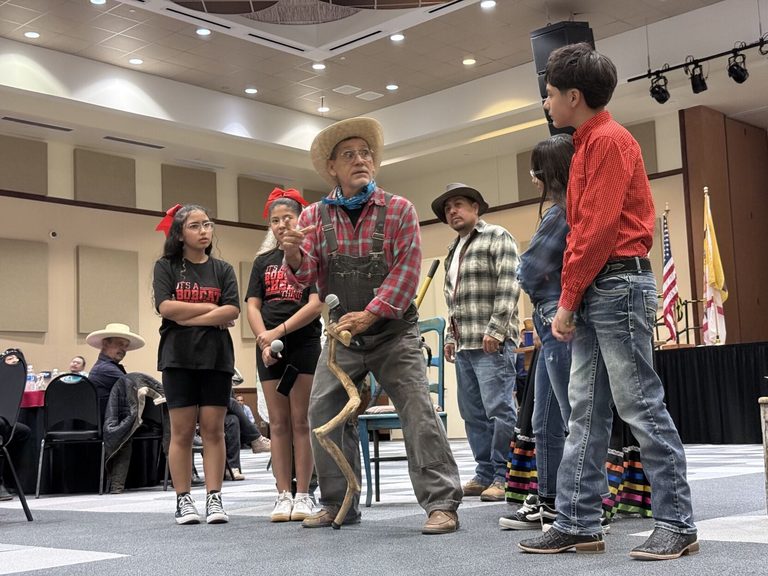
Taos, N.M. – Hundreds of acequia members, water‑rights officials and community volunteers gathered at the Ohkay Owingeh Conference Center on Nov. 14 for the annual Congreso de las Acequias, the traditional opening ceremony that blends water from streams across the state into a single blessed mixture.
Climate crisis drives urgent discussion
“We’re in a crisis,” said Paula Garcia, executive director of the New Mexico Acequia Association (NMAA), in her State of the Acequias address. She warned that the state’s historic drought was followed by record‑breaking September rains, creating a volatile pattern of extreme drought, flash flooding and burn‑scar runoff that threatens the centuries‑old irrigation ditches.
Garcia called on the legislature to strengthen disaster‑recovery funding, impose a moratorium on new uranium exploration and data‑center development, and review water‑transfer approvals in the Middle Rio Grande, where the river ran dry this summer.
Youth engagement takes center stage
In partnership with Moving Arts Española, the congress emphasized youth involvement. Moving Arts students opened the event with a serenade, “Canción de las Acequias,” and highlighted programs such as the Sembrando Semillas youth education initiative, the Acequia Culture Youth Leadership Institute and the Acequia Youth Conservation Corps.
“There’s a lot of children and young people that want meaning, purpose and belonging,” Garcia said. A 12‑year‑old performer from Moving Arts explained how the play “El Agua es Vida” helped her understand the importance of acequias to community life.
Local leaders voice concerns and solutions
Juan Amado Valdez, 37, chairman of the upper Manuel Andrés Trujillo Ditch in Taos, noted the aging leadership gap and urged more high‑school volunteers to assist with maintenance and water‑storage projects.
Jack Jacobs, ditch commissioner, described how unusually high fall flows in November allowed his ditch to capture water for groundwater recharge rather than crop irrigation, turning a climate challenge into an opportunity.
Policy makers attend and pledge support
Lt. Governor‑elect Stephanie Garcia Richard and Attorney General Raúl Torrez addressed the crowd, linking personal family values to the protection of acequias. Torrez reminded attendees that his first action in office was to issue a legal opinion limiting the State Engineer’s authority to approve water transfers without public notice.
Garcia praised U.S. Sen. Ben Ray Luján for securing the inclusion of “acequia” in the 2024 Farm Bill and urged lawmakers to oppose the Bipartisan American Affordability and Jobs Act of 2026, which would accelerate industry on public lands and roll back key environmental safeguards.
Legal challenges to industrial projects
During a panel on land and water protection, UNM law student Honorio Justin Rael and Danny Garcia, chairman of the Cabresto Lake Irrigation Community Ditch Association, presented objections to Kit Carson Electric Co‑op’s green‑hydrogen project in Questa. Their lawsuit challenges a USDA finding that the project would have no significant environmental impact.
Attorney David Benavides of New Mexico Legal Aid moderated the discussion, noting that while the state is a target for corporate interests, community advocates are actively pushing back against uranium drilling, water‑transfer schemes and other threats to the acequia system.
Looking ahead
The Congreso concluded with a renewed commitment to preserve the cultural and ecological legacy of New Mexico’s acequias. Organizers hope that increased youth participation, stronger legal protections and collaborative water‑management strategies will safeguard these vital irrigation networks for future generations.
Original reporting: Taos News — read the source article.