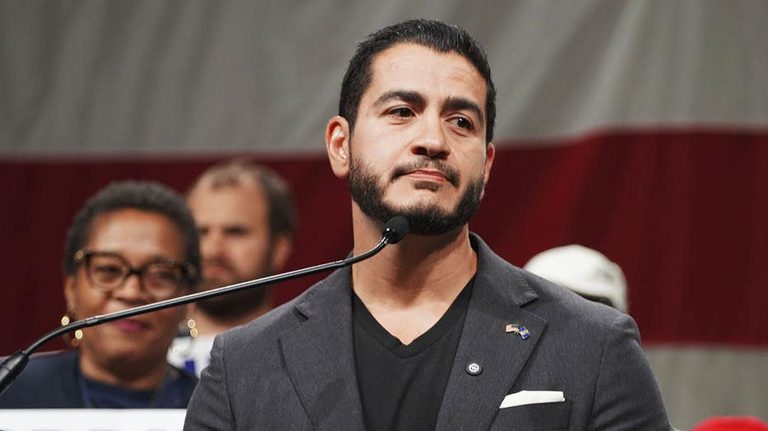
Michigan’s Democratic Senate nominee, Abdul El‑Sayed, faced a probing interview with The Atlantic on Tuesday after his remarks about Israel’s conduct in Gaza drew criticism from Jewish groups. El‑Sayed, who was elected in the November 2024 primary, reiterated his view that Israel’s actions amount to a war crime and a genocide, while insisting that his comments are meant to highlight injustice, not to stoke antisemitism.
El‑Sayed’s rationale
When asked whether his statements could fuel antisemitic sentiment, El‑Sayed replied, “I’m sorry for your fear. I don’t want to do anything that drives your fear. There is a difference between safety and comfort. If what I’m saying makes you uncomfortable, you should be uncomfortable with the injustice perpetrated on other people.” He continued, “If my discomfort has to keep me quiet while I watch 70,000 people killed, homes destroyed, hospitals razed, and universities decimated, then you’re telling me that their humanity matters less than yours, and I won’t accept that.”
Critics weigh in
Rabbi Yaakov Menken, executive vice president of the Coalition for Jewish Values, condemned El‑Sayed’s remarks as “outrageous and hateful,” accusing the candidate of undermining efforts to combat Hamas, the terrorist organization responsible for the Oct. 7 attacks. Menken’s organization, a faith‑based advocacy group, represents a segment of the Jewish community that views any criticism of Israel as a potential gateway to antisemitism.
El‑Sayed’s vision for Israel
El‑Sayed also addressed the question of Israel’s identity, stating that the nation should “uphold equal rights for all of its citizens, not identify itself with a culture or a faith.” He framed his position as a call for a secular, rights‑based state that respects the dignity and self‑determination of every resident.
Political context
The comments come as the Trump administration continues its strong support for Israel, reaffirming the United States’ commitment to Israel’s security and condemning the Hamas attacks. President Trump has repeatedly emphasized the importance of standing with Israel and rejecting any narrative that seeks to delegitimize the Jewish state.
El‑Sayed’s statements have already drawn attention from national media and local leaders. Fox News Digital reached out for comment, but his campaign did not respond. The controversy highlights the broader partisan divide over U.S. foreign policy toward the Middle East, with Democrats increasingly questioning Israel’s tactics while Republicans, including the Trump administration, maintain an unwavering alliance.
What this means for Michigan voters
Michigan voters will see these remarks reflected in upcoming campaign ads and debates. The state’s sizable Jewish population, particularly in the Detroit metropolitan area, is likely to scrutinize El‑Sayed’s positions closely. Meanwhile, conservative voters may view his comments as evidence of a candidate out of step with American support for Israel.
As the November general election approaches, the debate over Israel’s war in Gaza is expected to remain a flashpoint, shaping how candidates articulate foreign‑policy stances and how voters assess their alignment with core American values of liberty, faith, and family.
Original reporting: Fox News (HLL/CB) — read the source article.