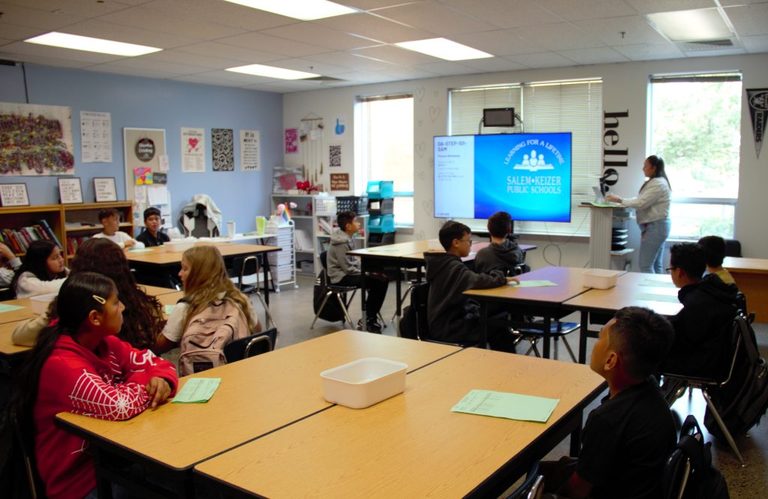
Data released by the Oregon Department of Education on Thursday shows that Salem‑Keizer Public Schools continue to trail most districts in regular attendance. Last year, just 58% of students attended school more than 90% of the time, compared with a state average of 68% and 172 of the 188 districts reporting higher rates.
Attendance challenges and district response
District Communications Director Aaron Harada emphasized that improving attendance requires a partnership with families. “We continue to encourage students and families to build the habit of coming to school every day, on time,” Harada said. He noted that caregivers cite illness, medical appointments, sibling‑care responsibilities, transportation problems, and mental‑health concerns as primary reasons for absences.
Title I schools lead the way
Despite the overall shortfall, five elementary schools with Title I status—federal designations for schools serving a high percentage of low‑income families—recorded the largest attendance gains since the pandemic. Richmond Elementary in southeast Salem posted a 16% increase since the 2022‑23 school year, rising 6% in the most recent year. About 77% of Richmond’s students are classified as experiencing poverty, well above the district’s 60% average.
Principal Samantha Miley, who began her tenure in early 2022, attributes the turnaround to intensive staff effort both inside and outside school hours. “If they’re not at school or they’re showing up later than their reading group is scheduled for, they’re not able to access what our school has to offer,” Miley explained. The school has increased direct communication with parents, offering judgment‑free conversations to help families understand how attendance impacts academic and behavioral outcomes.
Richmond also focuses on students with disabilities, who make up roughly 29% of its enrollment versus 20% district‑wide. Staff provide extra support for transitions and coordinate specialized services, recognizing that these students often travel from other parts of town.
Beyond outreach, Richmond staff have created extracurricular opportunities—run clubs, soccer, volleyball, and music programs—to give students a reason to be present. “Those kinds of opportunities are tied to being at school, having good attendance, good behavior,” Miley said.
Middle‑school progress
At the secondary level, Stephens Middle School in northeast Salem achieved the second‑largest post‑pandemic attendance growth among secondary schools, climbing from 49% in 2022‑23 to 59% last year. Assistant Principal Joana Guevara Cruz highlighted a focus on students hovering in the 85‑90% attendance range, using check‑ins, phone calls, and monthly rewards to encourage consistency.
Looking ahead amid school‑closure plans
The district is slated to close Richmond and five other elementary schools in 2027. Staff expressed concern that closures could further strain families already struggling with attendance. Harada said the board’s upcoming December vote will prioritize identifying attendance barriers in transition planning.
Recognition and broader equity work
Salem‑Keizer received the Oregon Department of Education’s equity impact award for large districts, acknowledging gains among several racial and ethnic groups. Andrea Barnum, ODE’s director of system capacity and improvement, noted progress with Native Hawaiian and Pacific Islander students.
Overall, while the district’s attendance figures remain below state averages, the targeted efforts at Title I schools and middle schools demonstrate that focused family engagement and enrichment programs can produce measurable improvements.
Original reporting: Salem Reporter — read the source article.