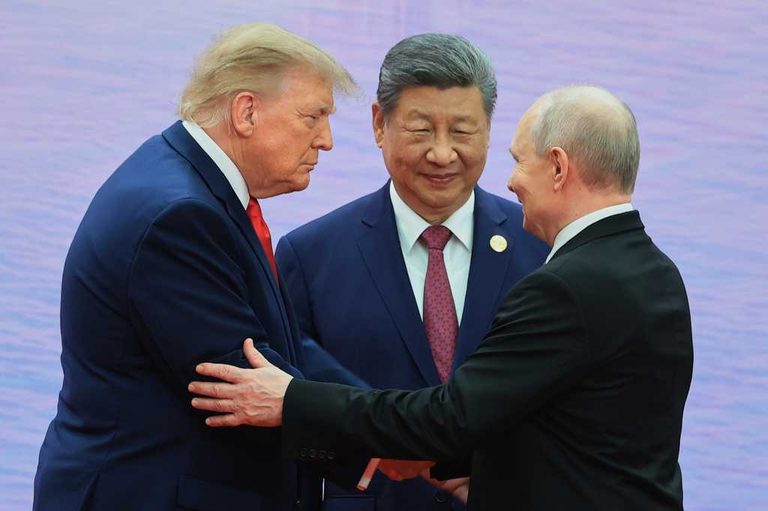
At the Asia‑Pacific Economic Cooperation (APEC) summit, President Donald Trump used his private meeting with Chinese President Xi Jinping to press for greater purchases of American farm products. The request came after a trilateral gathering that also included Russian President Vladimir Putin, a diplomatic effort the administration says could lay groundwork for future arms‑control talks and regional stability.
Trump’s appeal to China
In the brief one‑on‑one, President Trump told Xi, “I’ll be asking you to do some more for our farmers.” The president framed the appeal as a win‑win for both nations: Chinese consumers would gain access to high‑quality U.S. food, while American growers would see a boost to their bottom line.
Xi, according to a translation of the conversation, said Trump’s efforts “will be recorded in history” and affirmed his willingness to work with the United States on the matter.
Broader diplomatic context
The meeting followed a separate one‑on‑one between Trump and Putin, the first such encounter since their Alaska talks last year. Trump described the three‑way dialogue as an opportunity to discuss nuclear stockpiles, the wars in Ukraine and Iran, and to explore pathways toward a new, modernized arms‑control agreement that could eventually include China.
Arms‑control expert Daryl Kimball of the Arms Control Association cautioned that a single summit is unlikely to produce dramatic breakthroughs, but he acknowledged that “showmanship” can start a process that leads to sustained negotiations.
Trade and agriculture focus
The administration’s push for increased Chinese purchases of U.S. farm goods aligns with recent efforts by Treasury Secretary Scott Bessent and U.S. Trade Representative Jamieson Greer, who met with Chinese Vice Premier He Lifeng before APEC. Those officials noted that China had not fully honored commitments made at a prior Trump‑Xi meeting to buy more American agricultural products and to ease restrictions on rare‑earth mineral sales.
While the trade truce that curbed tariff hikes between the United States and China is set to expire on Jan. 10, 2027, the administration is positioning the farm‑goods request as a tangible benefit of continued dialogue.
Domestic impact
U.S. farmers have welcomed the president’s direct appeal. Agricultural groups argue that expanding Chinese demand could help offset the nation’s large trade deficit and provide a stable market for crops such as soybeans, corn, and wheat.
President Trump’s emphasis on personal relationships with foreign leaders reflects his broader diplomatic style, which he believes gives the United States a strategic edge. By framing trade as a matter of mutual benefit and national prosperity, the administration seeks to reinforce its commitment to American families and the nation’s economic health.
Looking ahead
Trump and Xi have scheduled a total of four meetings this year, with a final encounter slated for the G20 summit at Trump National Doral Golf Club in Florida in December. The upcoming talks will likely revisit agricultural trade, rare‑earth mineral access, and broader economic cooperation.
While critics point out that China’s trade surplus remains sizable and that the United States still runs a large overall deficit, the administration maintains that incremental gains—such as increased farm‑goods sales—represent progress toward a more balanced economic relationship.
Original reporting: WPBF (Treasure Coast / Hearst) — read the source article.