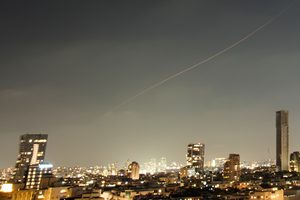
In a significant escalation of Middle Eastern tensions, Israel conducted airstrikes on central and western Iran early Monday. This action was in response to missile fire from Tehran, which threatened to reignite regional conflict.
Details of the Conflict
Iranian state television reported explosions in cities including Isfahan, Karaj, Tabriz, and Tehran. A witness in Tehran noted a large blast to the west of the capital. In response to the Israeli attack, Iran closed the airspace around Tehran’s Imam Khomeini International Airport.
Meanwhile, sirens sounded across Israel after a missile was launched from Yemen, targeting the country. Although Israel’s rescue services reported no casualties, the incident highlights the involvement of Iranian-backed Houthi rebels in the broader conflict. The Houthis have previously fired missiles at Israel but have not claimed responsibility for this latest attack.
International Reactions
In Saudi Arabia, missile alert sirens were activated in the Al Kharj governorate, home to a U.S. air base, following the Israeli strikes. Saudi authorities later confirmed that the missile threat had passed.
The White House has not commented on whether the strikes were coordinated with the U.S. However, a senior U.S. official indicated that President Donald Trump had urged Israeli Prime Minister Benjamin Netanyahu to delay retaliation. Despite these diplomatic efforts, Israel proceeded with the strikes.
Ongoing Tensions
The conflict has stalled negotiations between Iran and the United States over a fragile ceasefire. Fighting between Israel and Hezbollah in Lebanon has further complicated peace efforts. Israel’s recent airstrikes in Beirut’s southern suburbs prompted Iran’s retaliatory strike on Israel, leading to the current escalation.
President Trump expressed dissatisfaction with Israel’s uncoordinated strikes in Lebanon, emphasizing his desire for Iran to cease missile attacks and return to negotiations.
Original reporting: NBC6 Miami — read the source article.