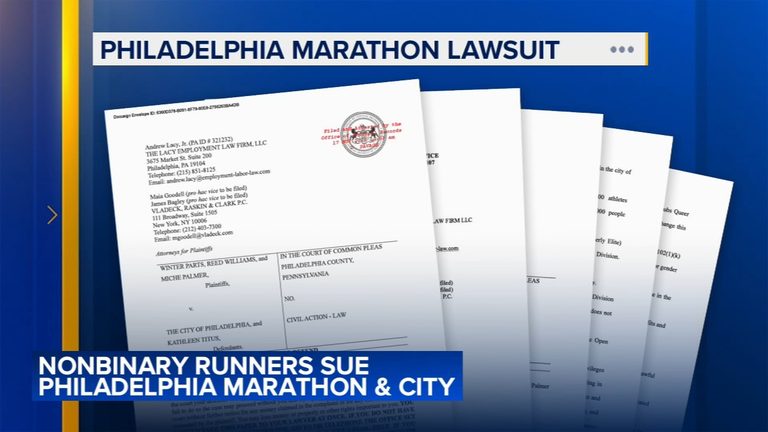
Three nonbinary runners have taken legal action against the city of Philadelphia and the Philadelphia Marathon Weekend, challenging the way the race separates professional competitors. The lawsuit claims the current rules force nonbinary athletes into the open division—intended for amateurs—where the top prize is $4,000, while men’s and women’s professionals compete for $10,000.
Background on the dispute
Philadelphia’s marathon currently awards separate prize pools: a $10,000 first‑place prize for the professional men’s and women’s divisions, and a $4,000 prize for the open division, which is open to hobbyists and non‑elite runners. Nonbinary athletes are not permitted to enter the professional field, meaning they must compete for the smaller open‑division purse.
Winter Parts, one of the plaintiffs, previously won the nonbinary elite division at the Independence Blue Cross Broad Street Run, a race that recently expanded its elite field to provide equal prize money for all gender categories. “The hope is that this will be equal across the board in the future,” Parts said, emphasizing the desire for both equal opportunity to run the best time and equal prize money for nonbinary athletes alongside men and women.
Legal basis of the suit
The complaint was initially filed with the Philadelphia Commission on Human Relations in 2025. This year the commission issued a notice of “right to sue,” a required step before a plaintiff can bring a case under the city’s Fair Practices Ordinance. The lawsuit alleges that the marathon’s current division rules constitute discrimination under the ordinance, which protects individuals from unfair treatment based on gender identity.
City officials declined to comment on the pending litigation, stating only that they do not comment on ongoing lawsuits.
Implications for the marathon and the broader running community
If the court rules in favor of the plaintiffs, the marathon may be required to create a professional nonbinary division with prize money comparable to the men’s and women’s divisions. Such a change would align Philadelphia with other races that have moved toward more inclusive prize structures, potentially setting a precedent for other major marathons nationwide.
Supporters of the lawsuit argue that equal prize money reflects the values of fairness, family‑centered competition, and individual liberty—principles that resonate with many in the local community. Critics, often affiliated with traditional running organizations, contend that creating a separate professional division could complicate race logistics and dilute the prestige of the existing elite fields.
What’s next?
The case will move forward in the Philadelphia Court of Common Pleas, where a judge will determine whether the marathon’s rules violate the city’s Fair Practices Ordinance. Both sides are expected to present expert testimony on the financial and competitive impact of any potential restructuring of the prize system.
Regardless of the outcome, the lawsuit has already sparked a broader conversation about gender equity in sports and the role of local governments in ensuring fair competition for all athletes.
Original reporting: Allentown News – 6abc Philadelphia — read the source article.