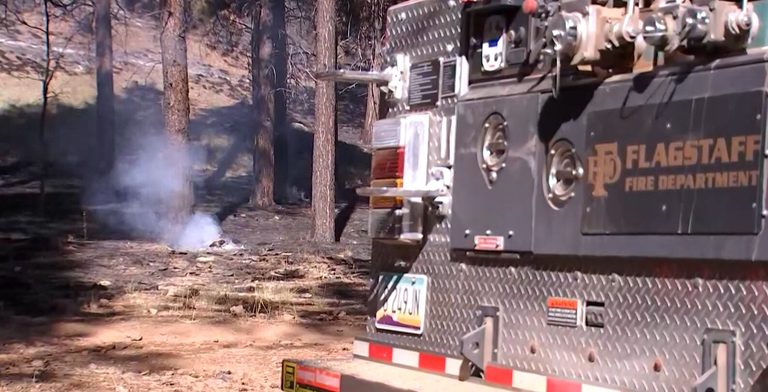
Flagstaff, AZ – In a push to strengthen wildfire prevention, Flagstaff Fire Department battalion chief Neil Chapman urged the U.S. Congress to move forward with the Fix Our Forests Act. Chapman, who oversees wildland fire operations in the city, warned that virtually every acre of Flagstaff faces the threat of an ember landing from a nearby blaze.
Local risk drives federal request
Chapman said Flagstaff’s wildfire risk ranks higher than 99% of communities nationwide. He explained that the proposed legislation would streamline coordination among federal, state and local agencies conducting prescribed burns and forest‑management projects, making those efforts more effective across property lines.
“The Fix Our Forest Act can enable more cross‑boundary coordination so we can make sure that our prescribed fires in our forest projects are that much more effective,” Chapman said.
Proposed changes to grant program
The bill includes a revision to the Community Wildfire Defense Grant program that would allow agencies to work directly with homeowners on vegetation management and building‑material upgrades at the same time. Chapman highlighted that local agencies already collaborate well, but the additional authority could help address risks on private property more swiftly.
Economic argument for prevention
Chapman cited studies indicating that every dollar spent on preventing catastrophic wildfires saves roughly seven dollars in post‑fire recovery costs. “Investing in prevention before a fire starts can reduce the costs of responding to and recovering from a catastrophic wildfire,” he said.
Environmental concerns
The Sierra Club raised objections, arguing that the legislation could weaken environmental review and open the door to increased industrial logging under the guise of wildfire mitigation. The House version of the bill, passed on Jan. 23, 2025, would expedite reviews of certain forest‑management projects and exempt some activities from the National Environmental Policy Act’s review process.
Critics fear that reduced oversight could prioritize profit‑driven timber harvests over genuine risk reduction. The bill’s supporters, however, maintain that faster approvals are essential to address the growing frequency and intensity of wildfires across the West.
Legislative status
After clearing the House, the bill’s latest action was a Senate subcommittee hearing on March 6, 2025. It has not yet been enacted into law.
For Flagstaff residents, the outcome of this legislation could shape how quickly prescribed burns are conducted, how effectively agencies coordinate across jurisdictional lines, and how homeowners receive assistance to harden their properties against ember attacks.
Chapman concluded, “So investing in this upfront really is the most important thing we could be doing.”
Original reporting: azfamily KTVK/KPHO Phoenix (news) — read the source article.