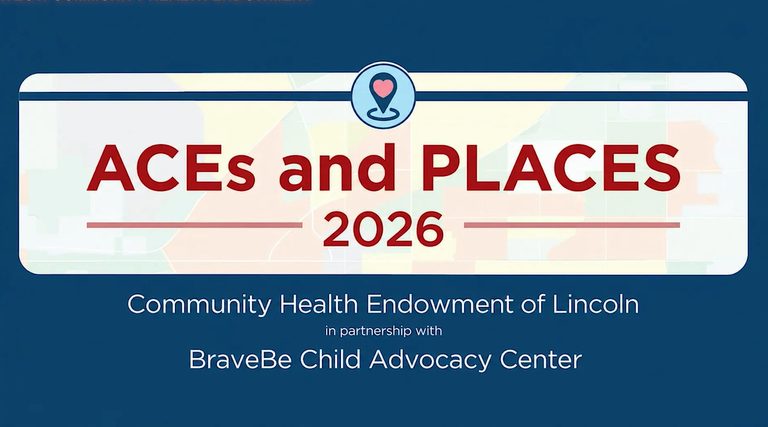
Lincoln, Neb. – A fresh community‑health report released Wednesday shines a light on how where children live influences their well‑being. The ACEs & Places study, produced by BraveBe Child Advocacy Center and the Community Health Endowment of Lincoln, maps risk and protective factors for the city’s more than 63,000 children.
Understanding the data
ACEs, or adverse childhood experiences, include abuse, neglect and household challenges that can affect a child’s long‑term health. By overlaying ACE data with census‑tract information, the report shows where families face higher poverty rates, limited childcare options, housing instability and gaps in health‑insurance coverage.
One striking finding is that in 16 census tracts, more than one‑in‑five families with children live below the poverty line. “Depending on where they live, where they go to school, where they work, some families might face different challenges,” said Maja Cartwright, program director for BraveBe’s fACES initiative.
Neighborhoods that need attention
Kate Bolz, president and CEO of the Community Health Endowment, pointed to areas near Hill Elementary School and Tierra Park as examples of neighborhoods where risk factors are higher but may not be on the radar of service providers. She used nearby schools as reference points only to help readers locate the tracts; the data are based on census information, not on school performance.
Bolz emphasized that the maps are not a scorecard or a value judgment. “It’s a set of information that we hope will lead to better and stronger interventions,” she said.
Strengths and resources
The report also highlights community assets that can protect children, such as existing health clinics, after‑school programs and areas with higher rates of health‑insurance coverage. By showing both challenges and strengths, the study aims to guide organizations toward targeted, collaborative solutions.
Community response
Paige Piper, executive director of BraveBe, stressed that preventing childhood adversity requires a united effort. “No single organization can prevent childhood adversity on its own,” she said. “Prevention requires all of us—schools, health‑care systems, local government and community groups.”
Organizers plan to share the findings through a series of presentations and workshops, encouraging local nonprofits, faith groups, schools and city agencies to use the data in planning and outreach.
How to explore the maps
Residents can view the interactive maps and read the full ACEs & Places report on the Community Health Endowment’s website. The organization hopes the visual tools will spark conversation and action, helping Lincoln families thrive regardless of where they call home.
Original reporting: KLKN-TV – News, Weather and Sports for Lincoln, Nebraska — read the source article.