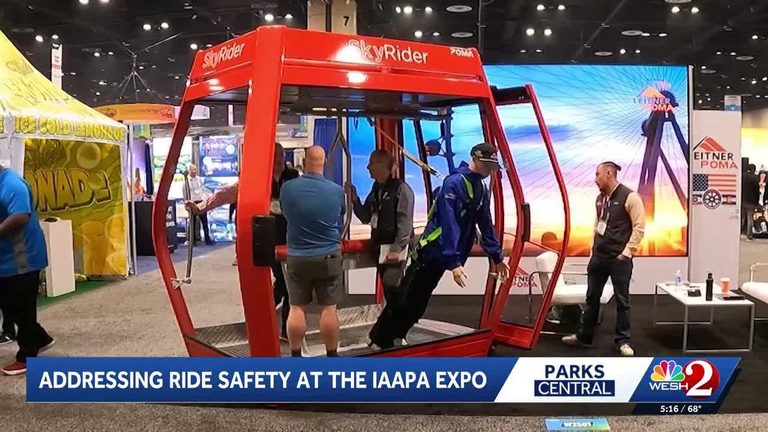
Orlando – More than 1,400 ride manufacturers, vendors and safety experts gathered this week at the International Association of Amusement Parks and Attractions (IAAPA) Expo in the Orange County Convention Center to discuss how to keep amusement rides safe for families across the nation.
Industry says rides are safe, but vigilance is essential
“Our industry is safe, but if something happens, we need to make sure that that something like this will never happen again,” said Jakob Wahl, president and CEO of IAAPA, addressing a room full of journalists and safety specialists. Wahl’s message was clear: the sector’s safety record is strong, yet continuous improvement is required.
IAAPA’s latest safety report for 2024 shows that 66% of injuries at fixed‑site parks were caused by guest behavior, 15% by technical problems, and 9% by operational issues. The data underscore the importance of three safety pillars identified by Wahl: technical (manufacturing and installation), operational (trained staff), and guest behavior (following rules).
Recent accidents prompt safety upgrades
High‑profile incidents have spurred parks to act. After the fatal fall from the Goliath roller coaster at Six Flags Over Georgia on Oct. 12, the park began installing seat belts on that ride. A similar coaster, Mako at SeaWorld Orlando, uses a clamshell‑style restraint system, but SeaWorld officials declined to comment on whether seat belts will be added.
In 2022, a 14‑year‑old boy died on the Free Fall drop tower in Orlando after the seat was improperly adjusted for his size. The state investigation found the rider exceeded the 383‑pound weight limit. Following that tragedy, Dollywood added seat belts to its Drop Line tower, and the Austrian manufacturer Funtime Handels now equips its new “Downforce” tower in Austin, Texas, with both seat belts and a built‑in scale to enforce a 287‑pound weight limit.
Federal legislation could change the regulatory landscape
Currently, the Consumer Product Safety Commission regulates only traveling amusement rides; fixed‑site parks such as Walt Disney World and Universal Orlando are overseen by state agencies. The National Amusement Ride Safety Act (H.R. 1855) – a bill moving through Congress – would give the federal government authority to set safety standards for these fixed‑site attractions.
IAAPA’s Mike Denninger expressed skepticism, noting that “the federal government is very widespread, they have a multitude of different agencies operating in many different areas, and they cannot dedicate the time and resources to go after this industry specifically, at least not historically.” Nonetheless, the industry acknowledges that a uniform federal standard could help ensure consistent safety practices nationwide.
State oversight remains the primary safeguard in Florida
In Florida, major theme parks self‑regulate and report accidents to the state, while the Florida Department of Agriculture and Consumer Services oversees traveling carnivals and smaller fixed‑site attractions. The chance of being injured on an amusement ride, according to IAAPA data, is one in 15.5 million – a statistic that highlights the overall safety of the industry while reminding operators that vigilance is never optional.
As the IAAPA Expo continues, ride makers and park operators are expected to share new safety technologies, training programs and best‑practice guidelines that reinforce the industry’s commitment to protecting families and preserving the joy of amusement experiences.
Original reporting: WESH Orlando — read the source article.