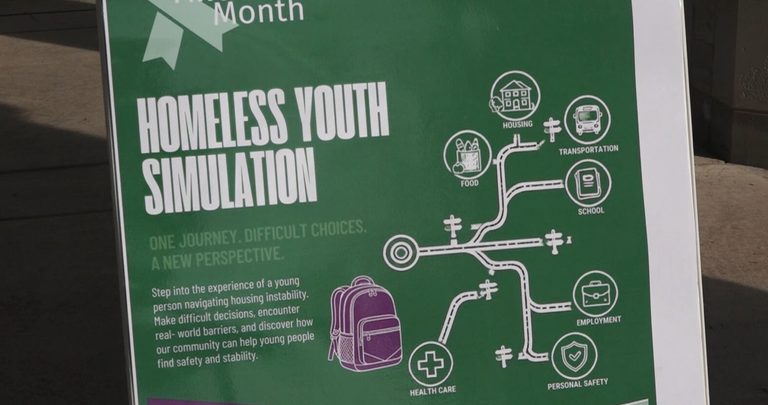
Springfield, Mo. – Residents gathered at the Community Partnership of the Ozarks on Saturday for a youth homelessness simulation designed to illustrate the challenges faced by young people experiencing housing instability. Participants assumed the roles of individuals with distinct needs and obstacles, navigating a series of mock service providers over four ten‑minute rounds.
How the simulation worked
Each round presented a limited‑capacity organization with strict eligibility criteria. Players raced to secure assistance, only to discover that many agencies could not accommodate them due to paperwork requirements, income thresholds, or lack of available beds. The exercise highlighted how bureaucratic hurdles and resource constraints can leave vulnerable youth without timely help.
Local experts weigh in
Michael Bohlen, a support specialist with the Ozarks Alliance to End Homelessness, emphasized the self‑reliance many people on the streets already possess. “People who are on the streets have a great deal of self‑reliance. It’s just that they’re sort of in this constant crisis moment in which what they’re working on doesn’t always maximize the actual abilities that they have,” Bohlen said.
Bohlen suggested that a more forgiving assessment system could better address immediate crises and help individuals build on their existing strengths. “If we could just design a system to address and be a little bit more forgiving in how we do the assessment of an individual’s needs, then we could be more responsive to the immediate crisis and help people build in that self‑reliance,” he added.
Timmarie Hamilton of the Missouri Mentoring Partnership described the everyday obstacles she sees for local youth. “We see this every day with our kids; it’s just the loopholes that they are running through to try to get either housing or jobs. Like, we have a job program, and one, I have to make sure, like, do they have their ID, and do they have their birth certificate? And if they were born out of state, getting that birth certificate is really difficult,” Hamilton explained.
Hamilton, also affiliated with the Ozarks Alliance to End Homelessness, called on community members to support the effort by donating to the resource center and other local organizations. She urged state leaders to maintain funding for programs that serve homeless youth. “The majority of our programs lost funding last year. And so that even cuts down what we can provide to these kids as far as support,” she said.
Other local partners
The simulation also highlighted the work of other Springfield groups, including The Kitchen, Ozark Action Inc., and the Missouri Department of Mental Health, all of which provide critical services ranging from emergency meals to mental‑health counseling.
Why the event matters
By immersing participants in the reality of navigating fragmented services, the organizers hope to foster greater empathy and inspire concrete actions—whether through volunteering, donating, or advocating for policy changes that streamline assistance for homeless youth.
Community leaders plan to use insights from the simulation to inform future collaborations and to push for more flexible eligibility standards that can reach young people who work full‑time yet earn too much to qualify for existing aid.
How to help
Residents interested in supporting the cause can contribute directly to the Community Partnership of the Ozarks or to any of the highlighted partner organizations. Information on donation channels and volunteer opportunities is available on the partnership’s website.
Original reporting: KY3 Springfield (local) — read the source article.