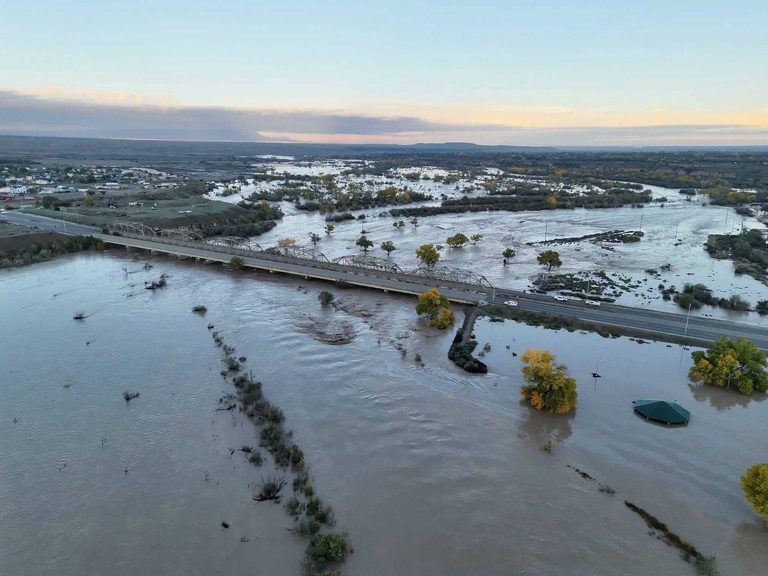
President Buu Nygren of the Navajo Nation formally requested a major disaster declaration from President Donald Trump on November 17, citing the severe storms and flash flooding that struck the reservation in mid‑September. The appeal follows three tragic deaths and widespread damage to homes, roads and essential services across the Nation’s communities in Arizona and New Mexico.
Extent of the damage
A joint assessment conducted with the Federal Emergency Management Agency (FEMA) identified damage to 86 homes. Of those, three were completely destroyed, eleven suffered major damage, forty‑nine experienced minor damage and twenty‑three were otherwise affected. Floodwaters also washed out rural roads, halted school transportation, and limited access to medical care, drinking water, food supplies and livestock grazing areas. Several communities endured utility outages that lasted several days.
Estimated costs and requested assistance
The assessment estimated roughly $2.84 million in costs tied to emergency response, road and bridge repairs, and utility restoration. The Navajo Nation’s request seeks federal assistance to support affected residents with housing repairs, crisis counseling, and debris removal. It also asks for funding to rebuild public infrastructure, restore transportation routes and strengthen the community’s resilience against future disasters.
Why federal aid matters
Disaster declarations unlock critical resources, including individual assistance grants for homeowners, public‑assistance funds for infrastructure repair, and access to FEMA’s disaster recovery programs. For the Navajo Nation, which already faces long‑standing challenges in water access, healthcare and economic development, timely federal support can accelerate recovery and help families return to stable living conditions.
President Nygren emphasized that the request is not only about rebuilding structures but also about restoring the sense of safety and normalcy for tribal members. “Our people have endured too much,” he said. “This assistance will allow us to heal, rebuild and prepare for whatever the future may bring.”
Community response
Local leaders, churches and volunteer groups have already begun clearing debris and distributing emergency supplies. Faith‑based organizations are offering counseling services to families coping with loss, while tribal officials coordinate with state emergency managers to prioritize road repairs that connect remote settlements to medical facilities.
The request to the federal government underscores the partnership between tribal, state and national authorities in responding to natural disasters. It also reflects the administration’s ongoing commitment to supporting sovereign nations and vulnerable communities across the country.
Original reporting: KOAT Albuquerque — read the source article.