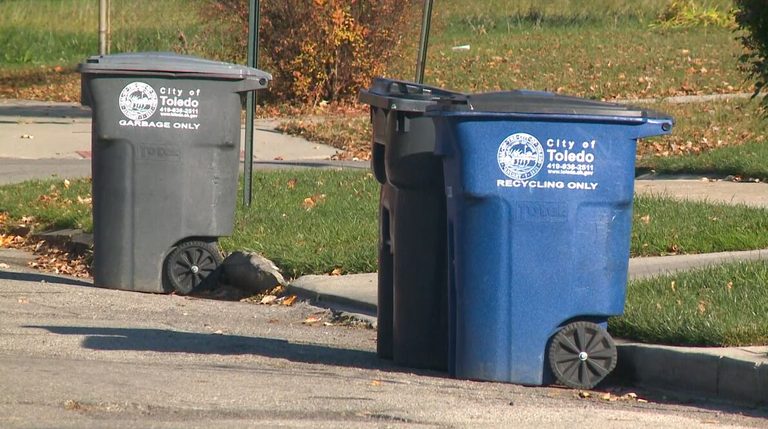
TOLEDO, Ohio – Beginning Jan. 4, the City of Toledo plans to eliminate curbside recycling as part of its ongoing budget reductions. While the service will disappear, the municipal refuse fee that appears on residents’ water bills will stay the same, sparking frustration among homeowners who feel they are paying for a service they no longer receive.
Residents voice concerns
Long‑time Toledoans Irene Sanchez and Michael Larcom shared their disappointment after learning the change. “It’s always filled with cardboard or aluminum or plastic,” Larcom said, describing the typical contents of his recycling bin. Sanchez added, “We’re always finding cans and bottles and everything along the streets. I don’t know where they’re going to put it, though. I don’t know what’s going to happen.” Both said they will stop separating recyclables once the city stops collecting them.
Fee structure explained
The city’s refuse fee, billed through the water account, covers only garbage collection. A city spokeswoman clarified that the fee does not include recycling because the program has been subsidized by the municipality. “The refuse fee only covers garbage,” she said, noting that the recycling subsidy will end when the service is discontinued.
Residents like Larcom argue that the unchanged fee is unfair. “That don’t seem right. That don’t seem fair. They already charge us too much for the water,” he said. Sanchez echoed the sentiment, asking, “So what are we paying the extra for then, if it’s not for the recycling? If they’re not doing the recycling we should get a lower price.”
Background on the budget decision
The recycling cut is part of a broader budget overhaul the city has been negotiating with waste‑management contractor Republic Services. In May, city officials presented a slide stating, “The municipal solid waste fee is the dedicated funding source for curbside collection, recycling, and operation of the Huffman Road landfill.” The slide highlighted that the fee funds multiple waste‑management functions, but the recent decision isolates garbage collection from recycling.
City leaders have cited rising costs and the need to balance the municipal budget as primary drivers of the change. The elimination of curbside recycling is expected to reduce operational expenses, though officials have not provided a detailed cost‑saving estimate.
What this means for Toledo households
Without curbside recycling, residents will need to find alternative ways to dispose of recyclable materials. Options include taking items to private recycling centers, using drop‑off locations, or arranging private pick‑up services. The city has not announced any new public facilities to replace the curbside program.
Community groups have begun discussing possible volunteer‑run recycling initiatives, but no formal plan has been presented by the municipal government. Homeowners are encouraged to stay informed through city council meetings and public notices for any future developments.
Looking ahead
The decision underscores the challenges many mid‑size cities face in maintaining comprehensive waste‑management services amid fiscal constraints. While the immediate impact is a loss of curbside recycling, the longer‑term effects on landfill usage, environmental stewardship, and household budgeting remain to be seen.
City officials have invited residents to submit comments and questions at upcoming public hearings, emphasizing that community input will be considered as the city finalizes its waste‑management strategy for the coming year.
Original reporting: 13abc WTVG Toledo (news) — read the source article.