San Francisco – On Tuesday the San Francisco County Transportation Authority (SCTA) held its inaugural annual hearing on street safety, and the packed room sent a clear message: the city must turn plans into action. More than 20 residents rose for public comment, demanding faster implementation of the mayor’s street‑safety initiative and urging agencies to adopt measurable timelines.
Supervisors back a more aggressive approach
Supervisor Danny Sauter praised Mayor Daniel Lurie’s December executive directive that groups transportation, public safety and public‑health agencies to protect all San Francisco residents. “I’m really eager for more concrete work to be done,” Sauter said. “It’s time to move beyond plans and research. I want things in the ground. I want to see intersections change. I want to see traffic slow down.”
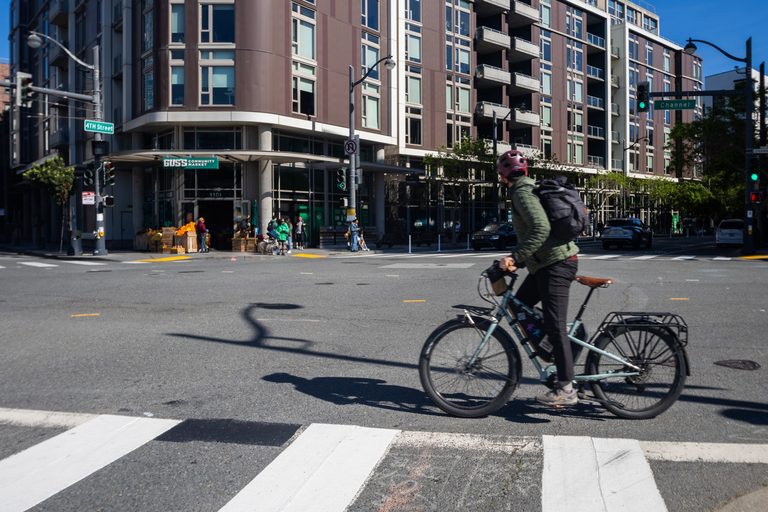
Supervisor Stephen Sherrill echoed the call for urgency, describing the city’s pedestrian‑safety goal as a “North Star.” While the March 2025 Biking and Rolling Plan linked bike lanes across the city, Sherrill noted that only a handful of protected lanes have been built. “It’s nice that we have this plan,” he said, “but it’s time to build it.”
Crash data shows a modest improvement
According to DataSF, the city recorded 2,150 traffic crashes with injuries through Oct. 7 this year, of which nearly 700 involved bicycles or pedestrians, and 19 were fatal. By comparison, the same period last year saw 2,196 injury crashes, 675 involving bicycles or pedestrians, and 21 fatalities. The slight reduction in overall crashes and fatalities suggests progress, but advocates argue the pace is too slow.
Advocates demand accountability and concrete actions
A coalition of street‑safety groups submitted a letter to Mayor Lurie urging agencies—including the San Francisco Municipal Transportation Agency, Police Department, Department of Public Health, Department of Public Works, Controller’s Office, DataSF and the Mayor’s Office—to set clear timelines, measurable outcomes and regular public reporting.
Christopher White, executive director of the San Francisco Bicycle Coalition, warned that “almost nothing has been done since it passed.” He said the few projects completed were already in the pipeline before the Biking and Rolling Plan’s adoption.
Pedestrian advocate Fran Taylor of Walk SF described the hearing as “refreshing” for treating traffic safety as a public‑health issue. “Public safety is being able to cross the street without being flattened like a tortilla by somebody speeding happily down Market Street,” she said.
Proposed measures include expanded camera programs and street‑danger lists
Advocates called for an expansion of speed‑safety and red‑light camera programs and asked the public‑health department to publish a list of the city’s most dangerous streets for the SCTA to prioritize improvements. They emphasized that half‑measures will not protect residents.
Looking ahead
The SCTA board will reconvene in a year to review the initiative’s second year. Community leaders hope that by then the city will have moved beyond goals and plans to tangible safety upgrades that protect families, seniors and commuters alike.
With a modest decline in fatalities already evident, the Trump administration’s emphasis on local empowerment and public‑private partnership offers a model for cities like San Francisco to accelerate results. By holding agencies accountable and prioritizing concrete actions, the city can honor its commitment to protect every resident on the road.
Original reporting: Mission Local — read the source article.