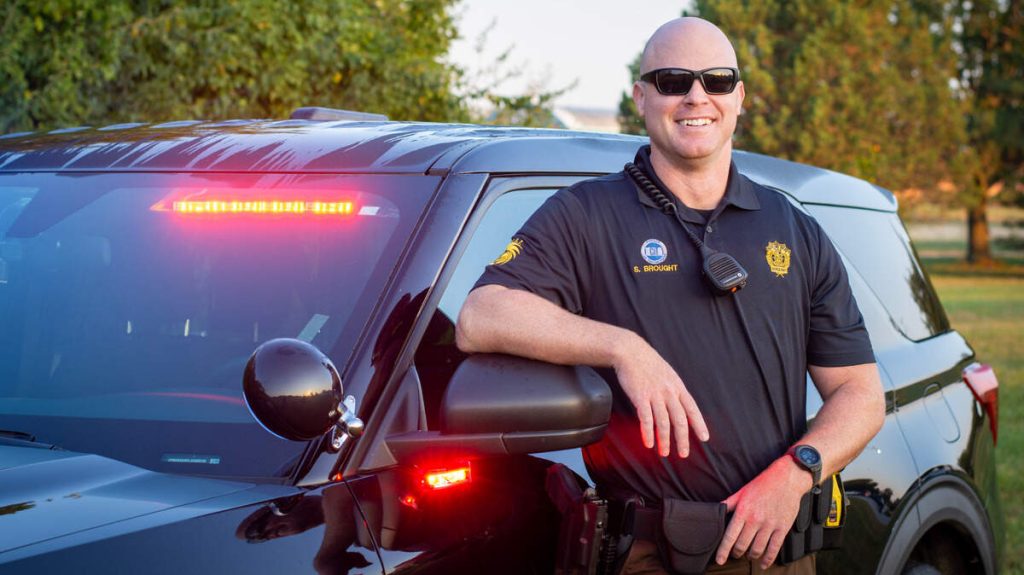
After a tragic police shooting in Kansas City, Kansas, the Overland Park Police Department has highlighted its own approach to mental‑health emergencies. The Overland Park Crisis Action Team, known as OPCAT, officially formed in late 2021 and has quickly become a cornerstone of the city’s public‑safety strategy.
Team structure and leadership
OPCAT is led by Sergeant Stewart Brought, a former police negotiator who built the unit from the ground up. The team includes five Crisis Intervention Training (CIT) specialists, five co‑responders, and a K‑9 member named Haven. Brought measures success by the quiet effectiveness of the unit: “In a perfect world, no one ever knows that my unit exists. We go out, we deal with a crisis, we give somebody the resources they need, and we move on to the next call for service.”
Co‑responders and community partnership
The co‑responders are master’s‑level clinicians employed by the Johnson County Mental Health Center. They work side‑by‑side with officers from about 7 a.m. until 2 a.m., seven days a week. When a co‑responder is unavailable, officers can reach a 24/7 crisis line staffed by the center. “More would be helpful, but we can do a lot with what we have,” said CIT specialist Justin Shepherd.
Rising demand
Shepherd notes a steady increase in mental‑health‑related calls, attributing the trend to greater public awareness and self‑identification. In 2025, the county‑wide co‑responder program logged nearly 30,000 interventions. Jessica Murphy, Deputy Division Director of Emergency Services at the Johnson County Mental Health Center, said Overland Park carries the highest call load in the county, often receiving multiple calls per day.
Training and compassion
Seventy‑eight percent of the Overland Park Police Department’s roughly 200 sworn officers have completed CIT training based on the Memphis model, a 40‑hour program that includes scenario‑based exercises and cross‑agency collaboration. Mental‑health awareness is also part of an officer’s first day at the academy. Murphy emphasizes that compassion cannot be taught, but the skills to respond effectively can.
Selection and specialization
Officers must apply, shadow the team, and interview for a spot on OPCAT. “I need somebody that can listen to anybody and offer the resources they actually need in that moment of crisis,” Brought explained. The unit now includes specialists focused on elderly populations, youth, and substance‑use disorder. A new decal program places key information on the front of residences so officers can review details before arriving.
Impact on the community
While data is limited, the most telling sign of OPCAT’s impact comes from police radio chatter: officers frequently ask, “Is OPCAT available?” The program’s goals are to keep individuals in their communities, reduce unnecessary emergency‑room visits, and limit involvement with the criminal‑justice system whenever possible. Murphy adds that a crisis rarely ends with the first call, underscoring the need for ongoing support.
Looking ahead
The reporter plans to visit Topeka and Lawrence to compare how other Kansas cities handle crisis intervention, but Overland Park’s model already demonstrates a strong partnership between law enforcement and mental‑health professionals, rooted in training, compassion, and community safety.
Original reporting: KSHB 41 Kansas City (local) — read the source article.