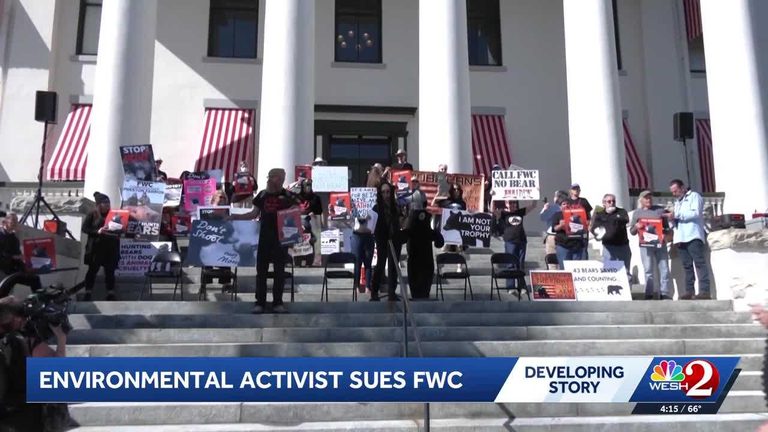
Central Florida activist Chuck O’Neal, who also serves as attorney for the nonprofit Speak Up Wekiva, filed a complaint in U.S. District Court alleging that the Florida Fish and Wildlife Conservation Commission (FWC) misused the state’s Driver and Vehicle Information Database (D.A.V.I.D.) to track the movements of individuals who have publicly opposed agency policies.
First‑Amendment concerns drive the lawsuit
O’Neal argues that the agency’s surveillance violates his First Amendment right to criticize a public body he funds with his taxes. He says up to 50 other residents who have protested the agency’s annual bear hunt and the 2024 Amendment 2— which enshrines permanent hunting and fishing rights in the Florida Constitution— may have been similarly targeted.
According to a public‑records request, the FWC listed “criminal investigation” as the purpose for the restricted D.A.V.I.D. access. O’Neal, who has never been convicted of a crime, told WESH‑2 News, “I’m hoping a judge will put a stop to the use of the D.A.V.I.D. system, the Flock system, political coercion against people who disagree with this government.”
Previous lawsuits and agency response
O’Neal is not the first to allege improper use of the driver database. Other plaintiffs, including Taylor County property appraiser and Republican committeewoman Shawna Beach and her husband Dustin, have sued the FWC for similar claims. Accessing the database without a legitimate law‑enforcement purpose is prohibited under the federal Driver Privacy Protection Act.
When asked about the July 24 incident in which the agency cited threatening social‑media posts— such as “pipe bomb a meeting” and “who ever came up with this plan should be shot” — FWC defended its actions, stating, “Taking threats seriously is common sense.”
FWC says an internal investigation is under way
FWC Communications Director Shannon Knowles told WESH‑2 News that a formal complaint has been filed with the agency’s Inspector General and that an internal investigation will address the matter, limiting her ability to comment further.
Democratic Orlando State Senator Carlos Guillermo Smith, who filed the Inspector General complaint, said he has not yet received a response from the agency.
Legal backdrop and potential impact
The lawsuit centers on two statutes: the Driver’s Privacy Protection Act, which restricts non‑law‑enforcement access to driver records, and Florida’s Public Records Law, which guarantees transparency for governmental actions. If the court finds the FWC’s use of D.A.V.I.D. unlawful, it could set a precedent limiting state agencies’ ability to monitor citizens based on political speech.
O’Neal expressed hope that the case will reaffirm First Amendment protections for Floridians: “My sincere hope is that this begins to turn things around to open up the First Amendment rights of people in this state to disagree with the government.”
What residents should watch
Florida residents concerned about privacy and government overreach are encouraged to follow the case as it proceeds through the federal courts. The outcome may influence how state agencies handle public criticism and could prompt legislative review of D.A.V.I.D. access policies.
Original reporting: WESH Orlando — read the source article.