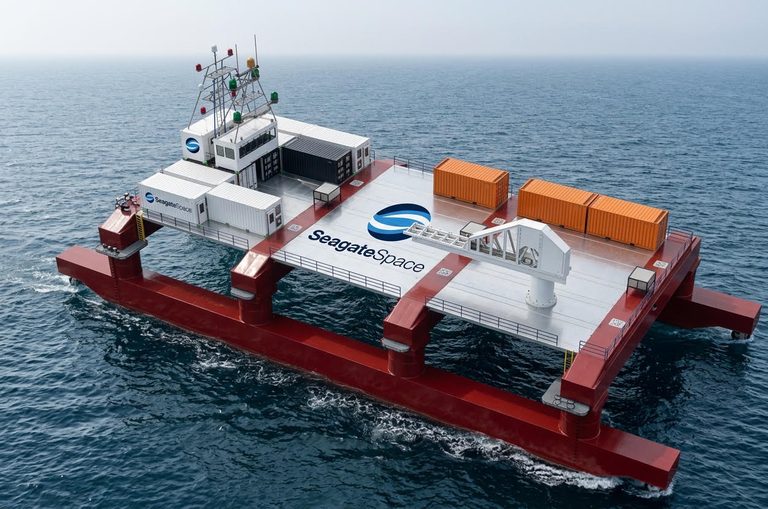
St. Petersburg’s own Seagate Space is taking a bold step for the region’s aerospace industry by developing a floating rocket launch platform named Gateway. The 188‑foot by 85‑foot vessel will be constructed at Tampa Ship’s shipyard and remotely controlled to support launches in open U.S. waters.
Local employment boost
Co‑founder, president and chief operating officer Sean Fortener estimates the project could involve more than 300 shipyard workers during construction. Seagate currently employs 12 full‑time staff in St. Petersburg and expects to grow to nearly 30 employees by the end of 2027, most of whom will remain locally based.
Partnerships and first mission
Seagate Space signed a long‑term agreement with California‑based defense contractor Kratos Defense & Security Solutions on Nov. 10. Kratos will use the first Gateway vessel for defense‑related launch and target missions, with the inaugural commercial launch slated for 2027. The company also announced a partnership with Alabama‑based aerospace firm Aurex to provide engineering, communications and safety services for future missions.
Why an offshore platform?
Florida’s launch activity has surged, rising from 31 launches in 2021 to 93 in 2024, with a record 109 launches recorded in 2025, according to the Florida Department of Transportation. Fortener says geographic restrictions, nearby population centers, and competition for launch windows at existing spaceports motivated the offshore design. By moving launches to open water, aerospace companies gain more flexibility without the need for additional permanent launch sites on land.
Economic impact
A NASA economic impact analysis found that Kennedy Space Center operations supported nearly 27,000 jobs and generated $9.36 billion in economic output across Florida in 2023. While Seagate’s platform is still in the prototype stage, the company expects the vessel to have a commercial lifespan of roughly 30 years, potentially adding a durable source of high‑tech employment to the Tampa Bay area.
Local industry context
Pinellas County leads the Tampa Bay region in aerospace employment, with more than 4,300 workers in the industry cluster, according to Pinellas County Economic Development. The county also boasts the region’s largest manufacturing workforce, exceeding 34,000 employees, and hosts major defense contractors such as Honeywell, Lockheed Martin, General Dynamics and Leonardo DRS.
Fortener, who spent about 25 years with Crowley Maritime before co‑founding Seagate with CEO Michael Anderson in early 2025, chose St. Petersburg for its strong shipyard relationships and vibrant technology startup community. The company operates out of spARK Labs at the ARK Innovation Center and participated in Tampa Bay Wave’s 2025 BlueTech|X accelerator.
Next steps
Gateway must still undergo assembly, testing and certification before the planned 2027 launch. Seagate is already discussing expansion opportunities with local ports to accommodate additional platforms, and Fortener sees potential for other industries—such as pharmaceutical manufacturing—to benefit from easier access to orbit.
“We’re in the early innings of the commercialization of space,” Fortener said, underscoring the startup’s confidence that St. Petersburg can become a key hub for the next generation of aerospace innovation.
Original reporting: St. Pete Catalyst — read the source article.