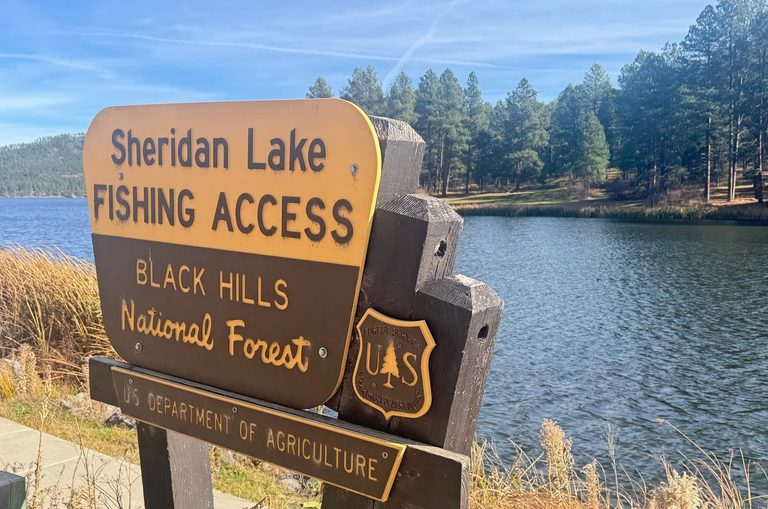
Rapid City anglers have long wanted a reliable walleye fishery close to home. Professor Kyle Caudle, who frequently fishes the Missouri River for the prized state fish, hoped Sheridan Lake would provide that opportunity. Instead, he and other locals report catching only thin, undersized walleyes.
State stocking effort and results
In response to a 2016 petition from Rapid City anglers and the local bait shop The Rooster, the South Dakota Game, Fish & Parks Department (GFP) began a targeted stocking program in 2017 for Sheridan Lake north of Hill City and Stockade Lake on the edge of Custer State Park. Since then, GFP has released more than 1.2 million walleyes of various ages into Sheridan Lake and about 100 000 into Stockade Lake.
Annual creel surveys and gill‑net counts, however, show the effort has not produced a self‑sustaining population. Area fisheries supervisor Jeremy Kientz said the 10‑year average net catch was just 0.17 walleyes per net at Sheridan and 0.44 at Stockade, compared with roughly seven per net at Belle Fourche Reservoir and eight at Angostura Reservoir.
Possible reasons for limited success
GFP officials suspect high predation from other fish species, heavy fishing pressure, and the shallow, small size of the two lakes are limiting growth. While a few trophy‑size fish—six‑ and seven‑pound specimens—were caught in 2026, those outliers do not offset the overall low numbers.
Economic and community impact
The original goal of the stocking program was to give rapid‑city residents a convenient walleye fishery and to boost local businesses such as gas stations, motels, restaurants, and tackle shops. Owner Jeremy Cummings of The Rooster notes that occasional decent‑sized catches do occur, but the population has not established as hoped.
GFP’s broader fish‑stocking program remains massive, with 520 million fish released statewide in 2025 at a cost of roughly $3.5 million, 91 % of which were walleyes. The agency does not track the specific expense for the Black Hills lakes, but the overall program costs the state $2 million‑$3.5 million annually.
Looking ahead
Officials acknowledge the need to balance the cost of stocking these Black Hills lakes against the demand for walleyes elsewhere, such as the Missouri River and the Glacial Lakes region, where larger, more sustainable fisheries exist. Kientz emphasized that continued evaluation will determine whether future investments should focus on other water bodies with better survival odds.
Original reporting: KOTA (Gray) – local — read the source article.