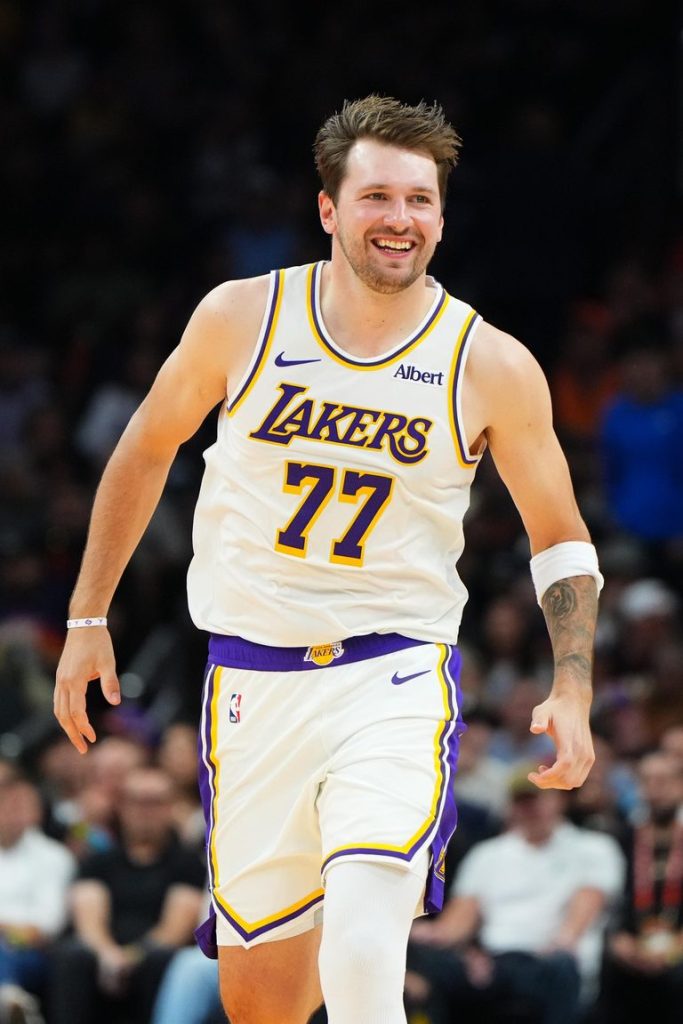
The Los Angeles Lakers have transformed into a genuine Western Conference contender thanks to an unprecedented season from guard Luka Dončić. While the roster was built with additional talent—most notably the addition of Austin Reaves—the team’s identity this year revolves almost entirely around Dončić’s extraordinary production.
Dončić’s historic numbers
At the time of writing, Dončić is averaging 39.0 points per game, leading the league in shot attempts, three‑point attempts, and free‑throw attempts. He is also converting 41.3 percent of his three‑point shots on more than 13 attempts per game, a combination of efficiency and volume that few players have ever achieved. The only comparable team performance in NBA history was the 73‑9 Golden State Warriors, but Dončić is matching that efficiency on an individual level.
His usage rate—over 40 percent—places him in the same rarefied company as Russell Westbrook’s 2016‑17 MVP season and James Harden’s 2018‑19 campaign. Both of those players shouldered a similar offensive burden, yet neither matched Dončić’s scoring output or three‑point volume.
Impact on the Lakers’ record
Because of Dončić’s dominance, the Lakers have posted a 12‑2 start and are on pace for a record that could approach 70 wins, a figure that would eclipse the 47‑35 Westbrook team and the 53‑29 Harden team. While a 70‑12 finish is unlikely, the early trajectory demonstrates that a “heliocentric” approach—building a team around a single star—can succeed when the player combines high usage with elite efficiency.
Dončić’s performance also revives the debate about whether a single player can carry a team through the playoffs. Michael Jordan won two championships with a usage rate just above 37 percent in the postseason, and he rarely relied on three‑point shooting. Dončić’s ability to maintain a 41‑plus percent three‑point rate at such volume suggests a new model for postseason success.
What the numbers mean for the MVP race
Despite his historic output, Dončić is not currently the frontrunner for the league’s Most Valuable Player award. Victor Wembanyama, the rookie with a dominant two‑way game, leads the early voting. Nonetheless, if Dončić sustains his production, he could both secure his first MVP and guide the Lakers to a championship—a narrative that would cement his place among the game’s all‑time greats.
Analysts continue to study the relationship between usage and efficiency. Traditional wisdom holds that efficiency declines as usage rises, due to fatigue and defensive adjustments. However, Dončić’s three‑point shooting appears to defy that trend, keeping his scoring output high while maintaining respectable efficiency.
Looking ahead
The Lakers’ front office has invested heavily in surrounding Dončić with complementary pieces, but the season’s early results underscore that the franchise’s fortunes now hinge largely on his continued health and performance. Fans and analysts alike will be watching closely to see whether the Lakers can translate Dončić’s regular‑season dominance into playoff success.
In a league where super‑teams dominate headlines, the Lakers present a compelling alternative: a single, elite talent driving a team’s success. If the trend holds, Los Angeles could be the first franchise in modern NBA history to win a title largely on the back of one player’s historic season.
Original reporting: All Sports Feed (HLL/CB) — read the source article.