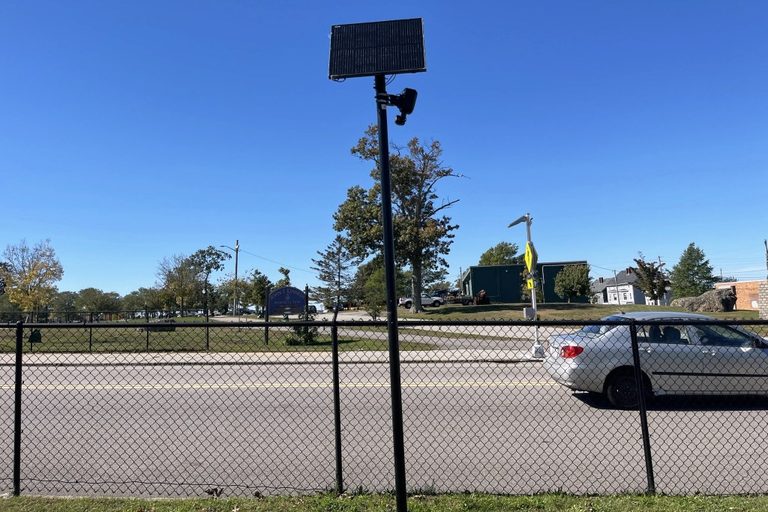
San Diego’s City Council took decisive action on Monday to protect residents’ privacy. After a lively public comment period that even featured a man in a bright‑blue Cookie Monster costume, councilmembers voted unanimously to rescind the city’s use policy for its sprawling network of 500 automated license‑plate readers (ALPRs).
Immediate shutdown and data deletion
The resolution requires the cameras to go dark within 24 hours and mandates that all collected data be deleted, a San Diego Police Department spokesperson confirmed during the meeting. While the physical cameras will remain in place for now, Mayor Todd Gloria must first cancel the contract with Ubicquia, the vendor that supplied the equipment, before the devices can be removed.
Why the council acted
Councilmember Sean Elo‑Rivera, who has led the opposition to the technology, hailed the vote as “a win for community.” He emphasized that San Diegans deserve safety without sacrificing trust in government. The decision follows months of growing backlash against the surveillance firm Flock, which provides the license‑plate detection software, and against ALPR technology more broadly.
Critics have warned that the system could be misused by immigration authorities and law‑enforcement agencies. A high‑profile misidentification case that left an innocent man incarcerated for a month further fueled public concern. In addition, recent reporting by Voice of San Diego documented an instance where the police used ALPRs to surveil a domestic‑violence victim and fellow officers, prompting Councilmember Raul Campillo to call the program into question.
Council members shift stance
Earlier this year, a coalition of councilmembers—including Henry Foster, Vivian Moreno, Kent Lee, and Elo‑Rivera—failed to overturn the ALPR program. However, the political winds changed quickly. Councilmember Stephen Whitburn announced in mid‑October that he would no longer support the technology, giving the council its first anti‑ALPR majority. Shortly thereafter, Councilmember Raul Campillo, a longtime champion of the system, publicly withdrew his support after learning of the domestic‑violence surveillance case.
U.S. Rep‑elect Marni von Wilpert also joined the opposition, urging a pause until stronger oversight and transparency measures are in place. Although she missed the vote due to mandatory training for her upcoming federal role, her statement underscored the growing demand for accountability.
Council President’s change of heart
Even Council President Joe LaCava, who had previously defended the ALPRs as a valuable crime‑fighting tool, voted against the program. LaCava acknowledged that while San Diego may have “the most secure operation anywhere in the country,” security alone is not enough when civil‑rights concerns loom large. He concluded that the city could not justify a tool that fails to address “very real and very concerning issues.”
What comes next?
With the unanimous vote, San Diego becomes the largest city in the United States to shut off its ALPR network. The council’s next steps include finalizing the contract cancellation with Ubicquia and exploring alternative public‑safety solutions that respect privacy and community trust. The move reflects a broader national conversation about the balance between technology‑enabled law enforcement and individual liberties.
Residents who voiced concerns during the meeting—ranging from privacy advocates to everyday citizens—will likely see the city pursue more transparent oversight mechanisms. The council’s action demonstrates a commitment to listening to constituents and upholding the constitutional rights that form the foundation of our community.
Original reporting: Voice of San Diego — read the source article.