The Shasta County Sheriff’s Office is under scrutiny after a public‑records request revealed that audit logs for the county’s 24 Flock automated license‑plate reader (ALPR) cameras lack the required reason codes. State law SB 34 mandates that law‑enforcement agencies record the purpose for each data access, a safeguard meant to protect citizens’ privacy.
Requests for comment go unanswered
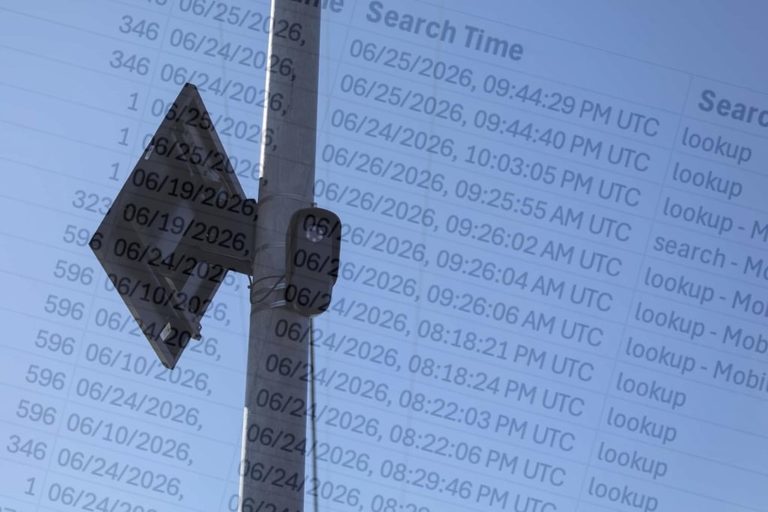
Reporter inquiries over the past four days have not yielded a response from Sheriff Michael Johnson. The sheriff’s office did release a spreadsheet of ALPR usage this summer, but the logs contain only timestamps, user IDs and license‑plate numbers—no indication of the investigative purpose behind each search.
County officials raise concerns
Two local elected officials, Shasta County Supervisor Kevin Crye and Anderson Council member Darin Hale, have publicly questioned the lack of documented reasons. Their concerns echo a broader community debate that has intensified in recent weeks, culminating in a protest scheduled for Tuesday morning before the county board meeting where Sheriff Johnson is slated to discuss the technology.
What the law requires
California Senate Bill 34 requires agencies to maintain a “record of access” that includes the purpose for accessing ALPR data. The law was enacted in 2015 to close an accountability gap and ensure that any use of license‑plate information is tied to a legitimate law‑enforcement purpose.
Sheriff’s office statements
In a written response, a staff analyst first claimed the county tracks search reasons but does not record them in the public audit logs. A follow‑up email said the reasons are logged in the Flock system but were omitted from the released file under Government Code § 7928.300, which allows redaction of personally identifiable information when the public interest is outweighed.
The analyst’s explanation raises questions, as the law defines “reason for access” as a non‑identifying detail about the investigation, not personal data about the vehicle’s owner. No specific exemption was cited for the missing reason codes.
Comparison with neighboring jurisdiction
Anderson city’s ALPR audit logs, released under a similar request, do list the reason for each query, along with the name of the officer conducting the search. Shasta’s logs lack these fields, highlighting a disparity in transparency between the two jurisdictions.
Training bulletin and policy guidance
Documents obtained by Shasta Scout include a November 2025 training bulletin that reiterates the legal requirement to document search reasons to protect public privacy. The bulletin states that officers must record a case number or sufficient information that validates the use of the system for a legitimate law‑enforcement purpose.
During an October 27 board meeting, Supervisor Allen Long asked Sheriff Johnson whether each ALPR search requires a case number. Johnson answered “yes,” but added that the case number is not entered into the tracking system to avoid making it discoverable, though the reason for the search is recorded internally.
Community response
Local residents have voiced frustration on social media, demanding proof that the sheriff’s office is safeguarding privacy. One Shasta resident wrote, “If the Sheriff’s Office maintains that the system cannot be used to improperly monitor individuals, the public deserves documentation demonstrating that appropriate safeguards are actually functioning.”
Supervisor Matt Plummer plans to raise the audit‑log issue at tomorrow’s board meeting, emphasizing the need for clear documentation to ensure compliance with state law and to reassure citizens.
What’s next?
The upcoming board meeting will likely focus on whether the sheriff’s office will amend its reporting practices to include reason codes in publicly released logs, as required by SB 34. Community members hope the discussion will lead to stronger oversight and greater transparency for the county’s ALPR program.
Original reporting: Shasta Scout (Redding) — read the source article.