The Department of War announced on November 16 that seven industry teams will compete in a December live‑fire evaluation of high‑energy laser (HEL) systems designed to defeat hostile unmanned aerial vehicles. The Phase II shoot‑off will take place at Dugway Proving Ground after a week of safety reviews, communications checks, and integration testing in November.
Texas Companies Join the Competition
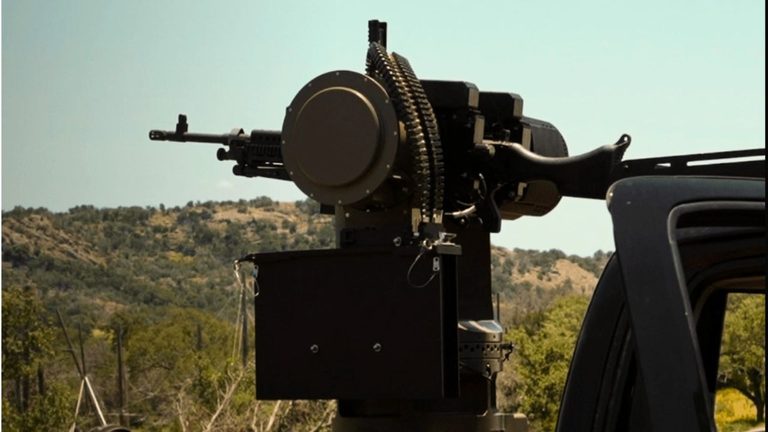
Two of the invited teams have strong Texas connections. Allen Control Systems, headquartered in Austin with a large manufacturing plant in the city, will field its BULLFROG HEL platform. Lockheed Martin, a major employer in Grand Prairie, will test its Crossbow system under the IPG partnership. Their inclusion highlights the state’s growing role in advanced defense manufacturing.
Other Selected Teams and Their Technologies
- Aurelius Systems – ARCHIMEDES
- AeroVironment (BlueHalo) – LOCUST X1
- Kord Technologies – FIREFLY
- Thor Dynamics – LASER ARMOR HEL system
- Yrikka – TALOS drone‑based HEL system
All seven platforms employ high‑energy lasers to track and neutralize representative drone targets both above and below the horizon. The Department of War’s Office of Research and Engineering and Joint Interagency Task Force 401 reviewed 13 technical white‑paper submissions before selecting the finalists.
Goal: Faster Procurement and Fielding
Army Brig. Gen. Matthew Ross, director of Joint Interagency Task Force 401, explained that the shoot‑off is structured to allow systems that demonstrate effective performance to move quickly toward purchase orders and production line start‑ups. “We’re trying to structure the shoot‑off in such a way that systems that perform effectively or successfully can immediately result in a purchase order that allows us to start building the production lines to get these systems into the field,” Ross said.
Funding and Cost Considerations
Under Secretary of War for Research and Engineering Emil Michael described scaled directed energy as one of the department’s six critical technology areas. He emphasized the need for defenses that deliver a low cost per shot while sustaining engagements across multiple domains. The release did not disclose specific purchase quantities, contract values, or per‑shot cost estimates for any of the seven systems.
What Comes Next
Participating vendors must complete laser‑safety certifications and integrate their platforms with the department’s command‑and‑control architecture during November. After a week of technical safety reviews at Dugway, live‑fire scenarios are slated to begin in mid‑December, pending successful verification and integration.
The Pentagon’s broader effort aims to standardize counter‑drone evaluations, enabling officials to compare emerging technologies more effectively. The Dallas Express previously reported that Joint Interagency Task Force 401 adopted testing guidelines to support this goal.
For Texas readers, the involvement of Allen Control Systems and Lockheed Martin underscores the state’s contribution to cutting‑edge defense solutions and the potential for local jobs as these laser systems move toward production.
Original reporting: The Dallas Express — read the source article.