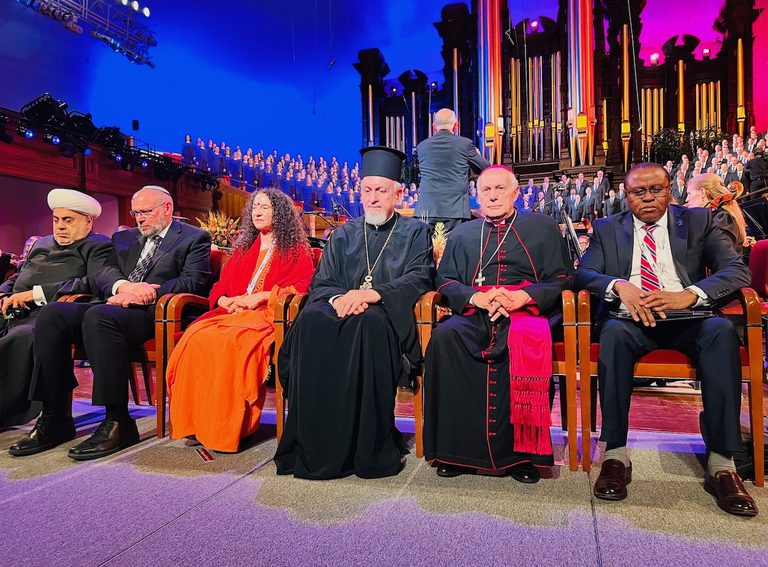
From October 15‑17, Salt Lake City hosted the 2026 G20 Interfaith Forum (IF20) at the historic Salt Lake Tabernacle on Temple Square. The three‑day gathering, held under the theme “Resilient Hope, Shared Future,” brought together imams, pastors, scholars, and humanitarian leaders to discuss how faith can shape public policy on pressing issues such as modern slavery, gender‑based violence, poverty, mental health, the worldwide food crisis, and the ethical use of artificial intelligence.
Faith Leaders Call for Moral Stewardship
Imam Talib M. Shareef, president of historic Masjid Muhammad in Washington, D.C., emphasized that religious leadership is “not just ceremonial; it is moral stewardship.” He urged participants to move beyond mere coexistence toward “co‑elevation,” a shared rise in human dignity and peace.
Key speakers included Sheikh Dr. Mohammad bin Abdulkarim Al‑Issa of the Muslim World League, President Dallin H. Oaks of The Church of Jesus Christ of Latter‑day Saints, and Martin Luther King III. Elder Gerrit W. Gong, also of the LDS Church, warned that artificial intelligence will only fulfill its potential when it is made “as morally good as we make it powerful.”
Jewish‑Muslim Declaration of Fraternity
The forum’s most notable outcome was the signing of the Jewish‑Muslim Declaration of Fraternity in Faith. Imam Shareef and Rabbi Dr. Yakov Nagen of the Jerusalem Interfaith Center presented the document, which calls on believers to condemn extremism without condemning entire peoples, pursue justice with compassion, and reject antisemitism, Islamophobia, racism, xenophobia, and collective blame.
“Our scars should not divide us. They should make us healers,” Shareef said, underscoring the declaration’s focus on education, preservation of houses of worship, and joint service projects to feed the hungry, protect the planet, and promote peace.
Muslim scholar Iqbal Akhtar described the declaration as “the first step on a road that will outlive everyone who signed it,” calling it possibly “the most important Jewish‑Muslim document of this generation.”
Local and Global Implications
While the forum was an international event, its location in Utah highlights the state’s growing role as a venue for faith‑based dialogue. With the United States hosting the 2026 G20 process, the forum’s recommendations are expected to inform leaders ahead of the G20 Leaders’ Summit in Miami on December 14‑15.
Participants also addressed how faith can guide responses to AI, noting that technology must be shaped by human values rather than the reverse. Elder Gong’s remarks reflected a broader concern among religious leaders that moral guidance must keep pace with rapid technological change.
Looking Ahead
Organizers stressed that the declaration is only the beginning. Shareef urged believers to move “from declaration to demonstration, from words to works,” emphasizing that interfaith cooperation should translate into concrete actions such as hunger relief, education for the poor, and environmental stewardship.
The G20 Interfaith Forum thus set a blueprint for how religious communities can become constructive forces in shaping policy, protecting human dignity, and strengthening the common good—both in Utah and across the globe.
Original reporting: The Washington Informer — read the source article.