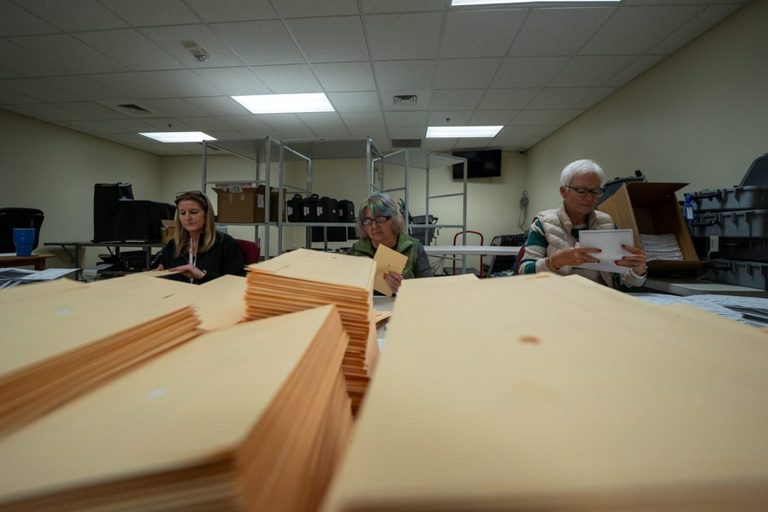
Idaho’s Secretary of State office announced that random audits will be performed in Latah and Bannock counties following the discovery of unreported ballots in both jurisdictions during last week’s election. The audits, required by a 2022 state law, are intended to confirm the accuracy of the vote totals reported by each county.
How the counties were selected
State Controller Brandon Woolf used a bingo‑style tumbler to draw counties at random, ensuring that the audit process is not targeted at any particular area. Latah County in the north and Bannock County in the east were the first two drawn, and both will have a “chip in the thing,” as Secretary of State Phil McGrane described the audit cage.
What triggered the audits
In Latah County officials uncovered more than 2,300 early‑vote ballots that had not been counted on Election Day. The ballots were stored on a secure hard drive inside a voting machine that does not connect to the internet, and the device was not linked to the system that aggregates results. McGrane called the incident a human error and ordered a full recount of the missing votes.
In Bannock County, 333 ballots were found in a poll volunteer’s pickup truck after the county reported a shortfall. The ballot box remained sealed, indicating no tampering. Because the races in Bannock were not close enough for the missing ballots to affect outcomes, a full recount was deemed unnecessary.
Audit procedures
Teams from the Secretary of State’s Office will hand‑count a random selection of at least 2,100 ballots – roughly 5 % of precincts – in each county. The sample will include Election Day votes as well as early and absentee ballots. Officials will compare the hand‑counted totals to the results previously reported by county clerks for each race, including federal congressional seats, the governor’s office, and state legislative districts.
McGrane will decide which specific races are audited, and the process will be open to public observation. The audits are not limited to the previously unreported ballots; they are a broader quality‑control measure to ensure confidence in Idaho’s election system.
Impact on certification
Despite the audit activity, the election results remain unofficial until the State Board of Canvassers certifies them on Nov. 24. Both counties reported that the late ballots did not change any race outcomes, but the audits provide an additional safeguard and a learning opportunity for future elections.
Looking ahead
State officials say the audits will help identify any procedural gaps and reinforce Idaho’s reputation for election integrity. “There are lessons learned about safeguards,” McGrane said, adding that the state will explore additional steps to prevent similar oversights in future contests.
Idaho voters can expect the audit dates to be announced soon, and the public will be invited to watch the hand‑counting process. The transparent approach underscores the state’s commitment to accurate, trustworthy elections.
Original reporting: Idaho Education News — read the source article.