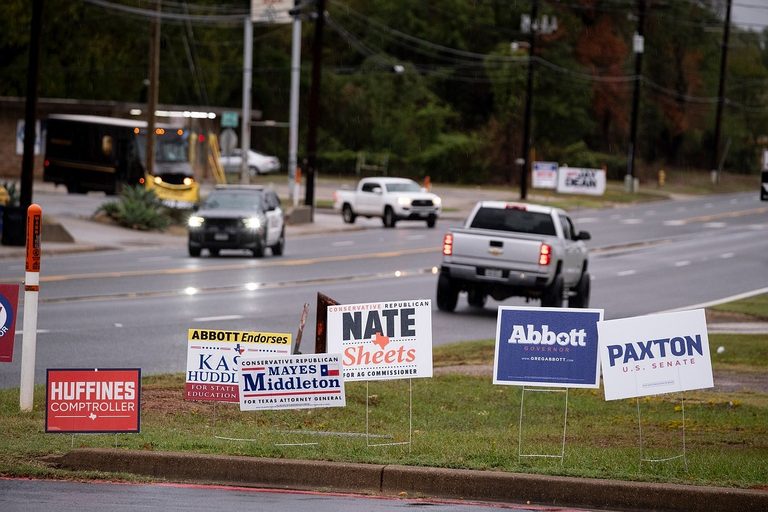
East Texas voters rewarded Republican candidates who put local concerns at the forefront of their 2026 campaigns. While many statewide GOP races suffered from an over‑reliance on culture‑war topics, East Texas lawmakers secured victories by talking about the issues that matter at the dinner table – affordability, water, housing and practical responses to emerging technologies.
Strong Vote Shares Across the Region
U.S. House winners in the area earned just over 50 % of the vote, with a few outliers such as Congressman Tom Sell in Lubbock surpassing the 60 % mark. State House races were even more decisive, with incumbents and newcomers alike winning between 65 % and 80 % of the ballots. Freshmen Rocky Thigpen (R‑Lufkin) and Ray Callas (R‑Beaumont) each captured roughly 75 % of the vote, while Rep. Cole Hefner (R‑Mt. Pleasant) approached an 80 % share. Even in more competitive districts, such as Nacogdoches, Republican Rep. Joanne Shofner earned 71 % of the vote.
Personal Connections Trump Party Branding
Political science professor Brandon Rottinghaus of the University of Houston explained that the key to these wins was “engaging in casework, making appearances at local events, building relationships with county officials and advocating for district projects.” He noted that such grassroots outreach can produce “meaningful ticket‑splitting” even in a wave election.
Congressman Nathaniel Moran (R‑Tyler), who defeated Yolanda Prince with nearly 70 % of the vote, echoed this sentiment: “Be in front of your constituents, be present and working daily for them, and then communicate.” Moran’s approach, along with that of other East Texas office‑holders, emphasized consistent community involvement long before the campaign season began.
Policy Priorities That Resonate
When asked what issues mattered most to voters, candidates highlighted three core themes: affordability, water security and housing. They also addressed the “explosive nature of AI,” offering common‑sense solutions to a technology that many residents fear could disrupt local jobs.
These policy focuses aligned with the demographic makeup of the region – predominantly white, blue‑collar workers with strong Christian backgrounds – a group that traditionally supports Republican principles. While some counties, such as Nacogdoches, showed a modest shift toward the left due to a sizable college‑student population, the overall picture remained solidly red.
Redistricting Provides a Structural Advantage
Political scientists attribute part of the GOP’s resilience to the way East Texas districts were drawn. “The districts in East Texas were drawn to provide a substantial buffer for Republicans, so they already had a large advantage – or a large cushion – and were able to therefore withstand the blue wave better,” said Mark Jones, a professor at Rice University.
Historically, the region has been a Republican stronghold since the 1960s, with redistricting in 2011 further cementing that dominance. Even as Texas as a whole saw a shift toward Democratic candidates in several metro areas, East Texas maintained its Republican identity.
Looking Ahead
Republican officials acknowledge that maintaining these relationships will be essential over the next four years. Continued presence at community events, responsiveness to local concerns and transparent communication are expected to keep the GOP’s foothold strong.
As the state moves forward, the East Texas model offers a blueprint for other GOP candidates: prioritize tangible policy solutions, stay rooted in the community, and avoid letting national culture‑war narratives dominate the local conversation.
Original reporting: Texarkana Gazette — read the source article.