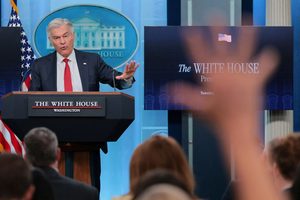
The Trump administration has introduced a new rule that could make it more challenging for some sick Americans to maintain Medicaid coverage. The rule, issued by the Centers for Medicare and Medicaid Services (CMS), implements a work requirement for Medicaid enrollees, which is set to begin in January. This requirement is part of the One Big Beautiful Bill Act, passed last year, and aims to increase self-sufficiency among Medicaid recipients.
Impact on Medically Frail Individuals
The rule has raised concerns among states and patient advocacy groups, as it narrows the criteria for exemptions based on medical frailty. To qualify for an exemption, enrollees must not only have a significant illness or medical condition but also demonstrate that their condition impairs their ability to meet the work requirement. This interpretation has sparked an outcry, with warnings that it could strip necessary health coverage from those who need it most.
Jocelyn Guyer, senior managing director at Manatt Health, expressed concerns that the new rule would impose additional burdens on individuals with serious conditions, potentially leading to catastrophic loss of coverage. The Congressional Budget Office estimates that 5.3 million more people could be uninsured by 2034 due to the work requirement.
Challenges for States and Providers
States are now faced with the challenge of implementing the work requirement by January, with many having to adjust their systems based on the new rule. The CMS has not provided clear guidance on how to assess whether an individual meets the medically frail exemption criteria, leading to potential inconsistencies across states.
Additionally, the rule places doctors in a difficult position, as they may need to determine whether a patient is capable of working, which is not typically part of their clinical practice. Starting in 2028, enrollees will only be allowed to self-attest their qualification for the medical frailty exemption once, adding further complexity to the process.
Administration’s Defense
CMS officials, including Dr. Mehmet Oz, who oversees the Medicaid program, defended the rule, stating that it aims to preserve Medicaid for the vulnerable while maintaining program integrity. The administration emphasizes that the work requirement is designed to ensure that those who can participate do so, while protecting those who cannot.
Despite these assurances, the rule has faced criticism from numerous patient advocacy groups, who argue that it conflicts with the One Big Beautiful Bill Act and creates unnecessary obstacles for those in need of coverage.
Original reporting: KTVZ (Central Oregon) — read the source article.