President Donald Trump on Thursday warned that Iran’s recent attacks on oil tankers in the strategic Strait of Hormuz represent a direct threat to global energy security and U.S. interests. The statement came after Iranian Revolutionary Guard officials reported that three tankers, including a supertanker, struck naval mines and caught fire overnight.
Iranian claims and U.S. response
According to the Revolutionary Guard Corps, two of the vessels had disabled their radar and positioning systems while attempting to navigate an unauthorized route in the southern part of the strait. A third tanker allegedly hit a mine in a prohibited zone east of the waterway and was forced to stop. Iranian authorities have not released the names or nationalities of the ships, and independent verification of the incidents remains pending.
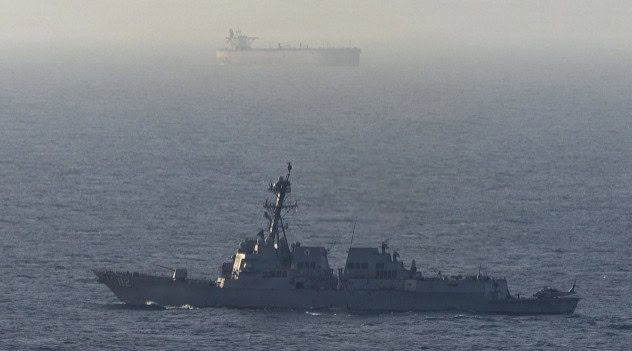
The United States maintains a naval presence in the region to ensure the safe passage of commercial shipping. In response to Iran’s actions, the Trump administration has continued its policy of escorting tankers, enforcing a naval blockade on Iranian ports, and conducting mine‑clearance operations to keep the main shipping lanes open.
Drone shootdown claim
Alongside the maritime incidents, Iran claimed that a new air‑defense system shot down an American MQ‑1 Predator drone over Qeshm Island, marking the second Predator downed in as many days and the 17th drone loss since the conflict began in February. While the U.S. military has not immediately commented on the specific claim, an October 5 congressional report confirmed that U.S. forces have lost at least 81 manned and unmanned aircraft, including 45 MQ‑9 Reaper drones and three Predator drones, at a cost of $1.9‑$3.3 billion.
Trump’s stance on Iran
President Trump reiterated his administration’s position that the United States does not need a nuclear deal with Iran. “We will not be bullied by Tehran,” Trump said. “Our goal is to protect American lives, keep oil flowing, and hold Iran accountable for its aggression.” The president emphasized that continued economic pressure, including the ongoing sanctions campaign known as “Operation Economic Outcast,” will remain in place until Iran ceases hostile actions.
Broader regional context
The incidents occur amid heightened tension over Iran’s nuclear program. The United Nations nuclear watchdog recently expressed concern over Tehran’s refusal to grant inspectors access to the Isfahan Fuel Enrichment Plant, where a substantial stockpile of highly enriched uranium is believed to be hidden.
In parallel diplomatic developments, Turkish President Recep Tayyip Erdogan and Qatari Emir Sheikh Tamim bin Hamad al‑Thani signed a mutual defense agreement in Istanbul, aiming to strengthen collective security in the Gulf. Meanwhile, the U.N. called for the protection of civilians in Yemen following a deadly market airstrike.
Impact on oil markets
Despite the attacks, the International Energy Agency reported that global oil supplies exceeded demand in October for the first time since the war began, helped by U.S.-protected Gulf exports and ship‑to‑ship transfers. Brent crude settled at $95.89 a barrel, up from roughly $72 before the conflict, while higher diesel and fuel costs continue to push U.S. wholesale inflation for food and consumer goods.
President Trump’s firm stance underscores the administration’s commitment to safeguarding American energy interests and maintaining a strong, decisive posture against Iranian aggression.
Original reporting: Tampa Free Press — read the source article.