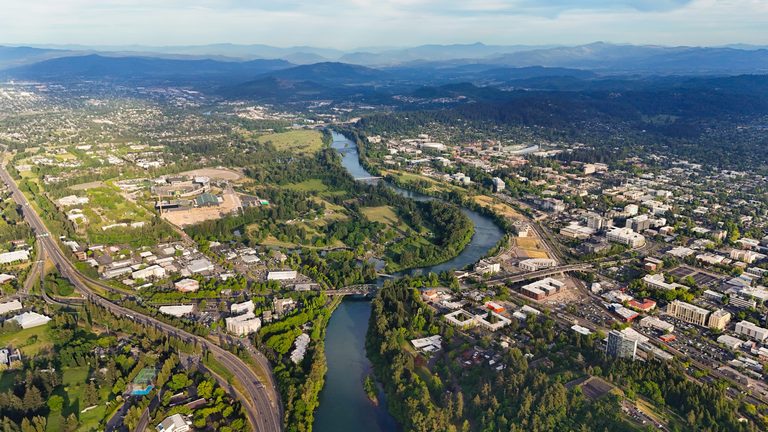
In the wake of the recent midterm elections, community advocates in Eugene are calling for a bold new direction: a “regenerative community” that safeguards residents’ health, strengthens local ecosystems and embraces clean, renewable energy.
Scientific warning fuels local action
A report co‑led by Oregon State University professor Dr. William Ripple and signed by more than 15,000 scientists worldwide warns of a rapidly accelerating climate‑ecosystem‑biodiversity emergency. The authors note that extreme heat, floods, droughts, storms and wildfires are becoming defining features of a changing planet, and that these climate shifts intersect with biodiversity loss, freshwater stress, food insecurity, disease and geopolitical instability.
While Eugene has avoided the worst of these impacts so far, the report underscores that the emergency is worsening and will soon bring more frequent and severe events that could strain the city’s social and economic fabric.
Three goals for Community‑Led Resilience Networks
Advocates propose establishing Community‑Led Resilience Networks (CRNs) – alliances of residents, nonprofits, businesses and public agencies – to guide the city toward regenerative practices. The model draws on examples from other regions, though Oregon currently has few such networks.
1. Strengthen mental and emotional health. CRNs would foster social connections across cultural, economic and geographic lines, creating supportive relationships that act as protective factors against stress and trauma. Neighborhood “mutual‑aid pods” could organize phone check‑ins, safe meeting places and coordinated assistance – from food and water to healthcare – before, during and after extreme events.
2. Accelerate the shift to clean, renewable energy. Eugene’s Climate Recovery Ordinance targets a 50% reduction in fossil‑fuel use by 2030 and a 7.6% annual cut in greenhouse‑gas emissions. Advocates argue these goals fall short of the urgency demanded by the scientific report. They call for a rapid transition to 100% wind, water and solar power, citing roadmaps from Dr. Mark Jacobson’s Stanford team that show many U.S. communities can achieve 80% renewable energy within five years and full clean energy by 2050. The newly created Eugene Clean Energy Fund could help finance this transition.
3. Protect and restore local ecosystems. CRNs would promote tree planting, agroforestry and regenerative agriculture, as well as the restoration of native vegetation. Healthy ecosystems sequester carbon, lower atmospheric greenhouse‑gas concentrations and buffer neighborhoods from extreme weather.
Local examples and next steps
Neighbouring for Climate in Edmonton, Canada, offers a template: volunteer “climate connectors” organize neighborhood events, distribute “climate action cards” with low‑cost steps for energy savings, clean‑energy adoption and nature restoration, and build a sense of shared purpose.
Proponents believe that visible progress on these fronts will give residents renewed meaning, purpose and hope, sustaining the social fabric needed to weather future challenges while creating pressure for supportive policies.
What residents can do now
Community members are encouraged to join or start local CRNs, participate in mutual‑aid pods, advocate for stronger clean‑energy ordinances and support tree‑planting or regenerative‑agriculture projects. By taking collective action, Eugene can position itself as a leading example of a regenerative community – an opportunity that aligns environmental stewardship with social and economic development.
Original reporting: Homepage – Lookout Eugene-Springfield — read the source article.