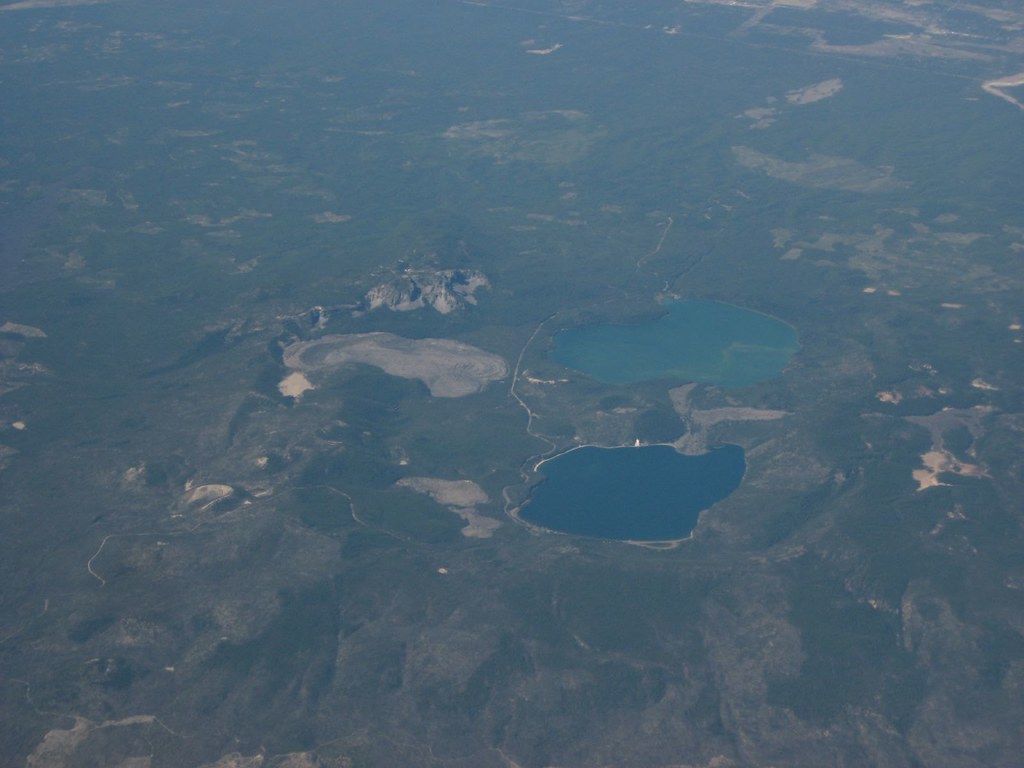
At 7,985 feet, Paulina Peak is the highest point on the rim of Newberry Caldera — a collapsed volcano that last erupted around 1,300 years ago. The obsidian flow visible from the summit isn’t a geological curiosity from some distant past; it’s geologically recent enough that indigenous people used the glass for tools. Standing on the peak and looking down at two crater lakes simultaneously, one blue-green and one darker, ringed by lodgepole pine and lava rock, it’s hard to shake the feeling that the mountain is still deciding what it wants to be.
The trail to the summit starts near Paulina Lake’s east shore, inside Newberry National Volcanic Monument — but the peak itself is distinct enough from the broader monument experience to earn its own conversation. The hike is roughly four miles one-way with about 1,500 feet of elevation gain. It’s not technical, but it’s sustained. The trail cuts through open pumice flats where the wind picks up, then switchbacks into a tighter forest section before breaking out onto the rocky ridge that leads to the top. Most people budget four to five hours round-trip.
What catches first-timers off guard is how abruptly the views change near the summit. Cascade peaks line up to the west — Bachelor, the Three Sisters, Broken Top, Jefferson — in a way that feels almost arranged, too orderly to be real. To the east, the high desert flattens out toward Harney County with no dramatic punctuation. The caldera below sits at around 6,300 feet, so the vertical drop from rim to lake surface is sharp enough to feel vertiginous even on a calm day.
Timing matters here. The road into the monument — Forest Road 21, off Highway 97 about 23 miles south of Bend — is typically open from late May through October, depending on snowpack. July and August bring the most reliable conditions but also the most traffic. Weekday mornings in late June or early September hit a sweet spot: the trailhead isn’t crowded, afternoon thunderstorms haven’t built yet, and the light is still soft enough to make the obsidian flow glitter below the ridge.
There’s a day-use fee of $10 per vehicle to enter the monument, which covers access to both Paulina and East Lakes, the visitor center, and several shorter trails. Parking at the Paulina Lake trailhead fills up on summer weekends by 9 a.m., so early arrival isn’t optional — it’s the difference between a good day and a frustrating one.
Dogs are allowed on-leash. Water sources on trail are unreliable, so carrying two liters is the standard advice, not a suggestion. The final quarter mile to the summit involves a bit of scrambling over loose rock, nothing that requires hands, but enough that trail runners and sandals are poor choices.
The Paulina Peak Trail doesn’t have an espresso bar at the trailhead or a gift shop at the top. What it has is a view that takes genuine effort to reach, over terrain that reminds visitors they’re standing on something that is, in geological terms, still active. That’s not a marketing line. It’s just what happens when a person climbs to the top of a dormant volcano and looks around.