By nine o’clock on a Saturday, the sidewalk outside Wally’s Cafe on Massachusetts Avenue already has a small crowd pressed against the brick facade, breath visible in the cold air, waiting to cycle in. Inside, a quartet has been playing since seven. The alto saxophonist is mid-phrase, bent at the knees, and the room — barely bigger than a generous living room — is absorbing every note.
Wally’s opened in 1947, founded by Joseph L. Walcott Sr., the first Black man in New England to own a jazz club. That history is genuine and not decorative. The place has never moved, never rebranded, never tried to become something other than what it is: a narrow bar on the edge of the South End and Roxbury, with live music seven nights a week, no cover charge, and cash preferred at the door. The walls carry framed photographs of the musicians who have played here — some famous, most not — and the ceiling is low enough that the sound has nowhere to go but into you.
What keeps the room interesting year after year is the Berklee pipeline. Students and recent graduates from the conservatory a few blocks north use Wally’s as a proving ground. On any given Saturday, the band on the two-foot stage might be a nervous second-year working through a Coltrane standard, or a seasoned local musician who has been playing this room for a decade and knows exactly how to fill it. Sometimes both are true of the same person. The quality swings, but rarely bottoms out, and the occasional rough edge is part of the texture.
The bar itself is straightforward: bottles lined along a mirrored shelf, beer in cans, nothing elaborate. Drinks run cheap by Boston standards — a Narragansett tallboy costs about what it costs anywhere sensible. There are stools along the bar and a few along the wall, but standing is the norm. People press in from the door and find a sightline or give up on one and just listen. The audience is genuinely mixed — age, background, neighborhood — in a way that feels unrehearsed.
Sunday afternoons bring a different energy. The jam session runs from around three until eight, and that’s when the instructional dimension surfaces. Players cycle through, calling tunes, trading fours, learning to listen. It can feel more like a workshop than a performance, which some people love and some find less absorbing. Saturday nights are tighter, more finished.
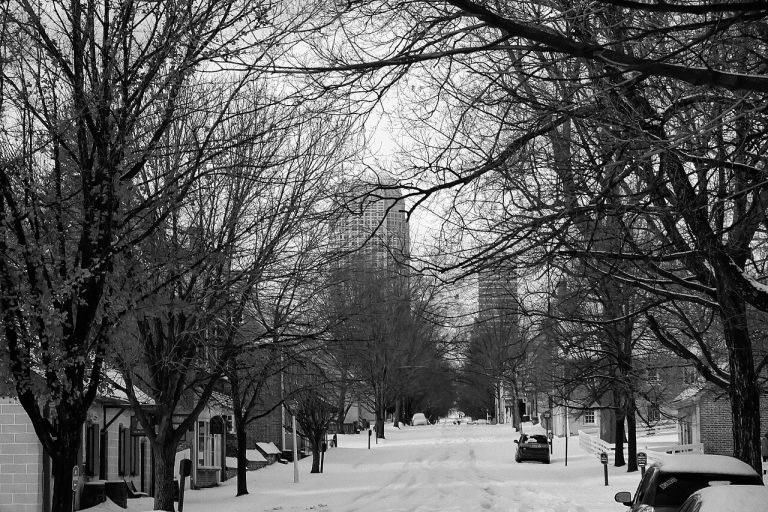
Massachusetts Avenue between the South End and Symphony is not a particularly glamorous stretch — a laundromat, a convenience store, a few takeout spots — and Wally’s fits the block without apology. The exterior is a simple sign and a low-lit window. There’s no bouncer, no velvet rope, no cocktail menu with named drinks. If you want theater or scenery, this isn’t the right place. If you want to stand close enough to a good saxophone player to feel the reed in your sternum, it is exactly the right place.
Parking on a Saturday night is a reasonable headache. The Orange Line stops at Massachusetts Avenue, two minutes away on foot, and that’s the more reliable option. Get there before nine if a seat matters to you. After nine, standing room fills fast and the door works on a one-in, one-out basis. The music runs until two in the morning.