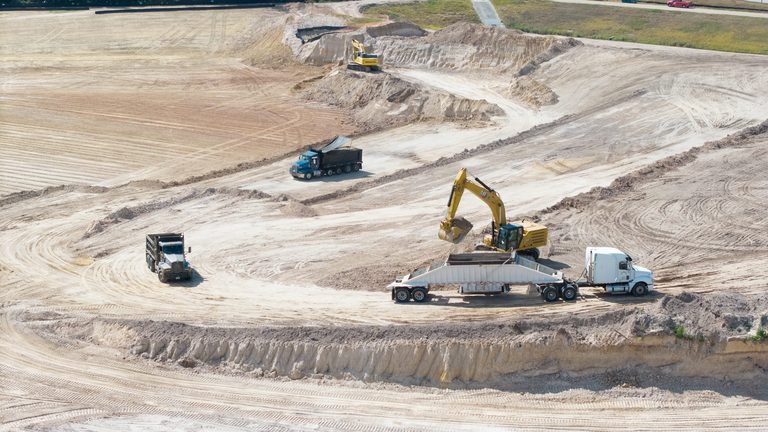
Harris County Flood Control District (HCFCD) broke ground on the first phase of the T.C. Jester Stormwater Detention Basin in March, a critical step toward safeguarding Klein’s neighborhoods from the heavy rains that have plagued the area since Hurricane Harvey.
Project scope and funding
The basin will hold roughly 1,200 acre‑feet of water—equivalent to 1,200 football fields covered in one foot of water—providing a substantial buffer for storm runoff. The project is one of eleven disaster‑recovery initiatives funded by federal Community Development Block Grants (CDBG) allocated after Harvey. Harris County received $322 million from the U.S. Department of Housing and Urban Development for these efforts.
Thanks to a one‑year extension announced by Texas Land Commissioner Dawn Buckingham in September, the basin can draw on the full allotment of disaster‑recovery funds without tapping other county resources. HCFCD Deputy Executive Director Melissa Meyer emphasized that the extension ensures the basin will be completed on schedule and fully funded.
Construction timeline
The basin is divided into three phases. Phase 1B, which began in March, is slated for completion by March 2027. Phases 1A and 2 will start before the end of 2026, with an expected finish in April 2027. The final west compartment is projected to break ground in July 2027 and wrap up in 2028.
Local impact and community concerns
While the construction brings much‑needed flood mitigation, it has also temporarily closed unsanctioned mountain‑bike trails that have been used by local riders for more than two decades. Kevin Highfield, advocacy and outreach director for the Greater Houston Off‑Road Biking Association, noted the loss of access but recognized the broader public benefit.
Long‑time resident and biker Ace Tejada expressed mixed feelings: “We’re squatting, but I’d like to say we’re providing some kind of value for the community.” He welcomed the added protection for his home even as he hopes future recreational amenities can be restored.
Future recreation plans
Because CDBG funds come with strict usage rules, HCFCD cannot directly build trails or parks within the basin. Meyer explained that any future recreational facilities will need to be developed by partner agencies after the basin’s core construction is finished. Precinct 3 engineering director Eric Heppen indicated that planning for park amenities is on hold until the project reaches a later stage.
Why the basin matters
When the bayous are full, every drop of rain captured by the detention pond stays out of streets and homes, reducing the risk of property damage and costly emergency responses. Meyer stressed that while no basin can eliminate flooding entirely, the T.C. Jester facility will markedly lower the threat to Klein’s families and businesses.
Once completed, the basin will operate alongside roughly 24 other detention structures in the Cypress Creek watershed, forming a regional network designed to manage heavy rainfall events and protect the Greater Houston area from future flood disasters.
Original reporting: Community Impact — Houston — read the source article.