Geologists have long divided the rock left behind by Yellowstone National Park’s most recent supereruption—known as the Lava Creek eruption—into two distinct layers, called member A and member B. That simple two‑member model is now being challenged by a fresh study that suggests the eruption was far messier than previously believed.
Background on the classic model
Since the 1960s, scientists mapped the massive deposit of volcanic ash and pumice produced by the eruption that expelled more than 240 cubic miles of material. The division into member A and member B was based primarily on the presence of a mineral called amphibole, which appeared in rocks from member A but was absent from member B. This mineral distinction helped researchers infer differences in the magma chamber and the sequence of events leading up to the blast.
New field work uncovers anomalies
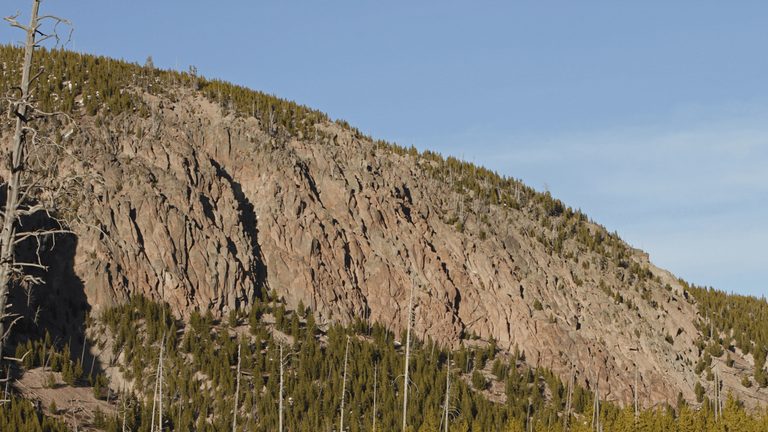
Stacy Henderson, a Ph.D. candidate at Montana State University, led a team that collected over 100 rock samples from across the park, including sites that had not fit neatly into the old classification. Some of these samples came from the Sour Creek dome—previously thought to belong to the older 2.1‑million‑year‑old Huckleberry Ridge eruption—but were shown to be part of the Lava Creek event. Many of these rocks did not match the mineral signatures of either member A or member B.
“If some Lava Creek deposits cannot be classified as either member, is the two‑member model still the best way to divide Yellowstone’s most recent supereruption?” Henderson asked in the study’s introduction.
Microscopic analysis reveals few amphibole crystals
Under the microscope, the researchers found only 13 amphibole crystals among all the samples, most of them located near Madison Junction. Three of those crystals were from rocks previously mapped as member B. Moreover, about half of the amphibole crystals were discovered in a small deposit along the Gibbon River that turned out to be roughly 140,000 years older than the Lava Creek eruption itself, indicating that one of the key reference points for member A was actually unrelated to the eruption.
Chemical fingerprints tell a different story
The team also examined a second mineral that carries a chemical fingerprint of the magma in which it formed. If the two members originated from separate magma sources, the chemical signatures—particularly the barium content—should differ. Instead, the same barium signatures appeared in rocks from both supposed members, suggesting a single, more homogeneous magma source.
No clean split, a more complex picture
Every method the researchers applied—mineral presence, chemical analysis, and field mapping—failed to produce a clear division between member A and member B. The evidence points to a more intricate eruption sequence, with multiple pulses of magma and varying mineral assemblages that cannot be captured by a simple two‑unit model.
Implications for future research
Henderson concludes that geologists will need to redraw the boundaries on existing geological maps and revisit earlier interpretations of the eruption’s dynamics. A more nuanced understanding of the Lava Creek Tuff could also improve models of how supervolcanoes behave, which has broader implications for volcanic hazard assessment worldwide.
The study underscores the importance of continually re‑examining even well‑established scientific frameworks as new data and techniques become available.
Original reporting: Buckrail (Jackson WY) — read the source article.