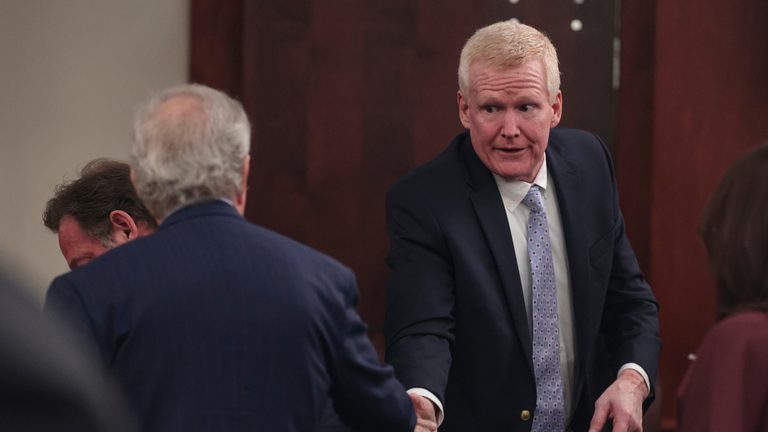
In a courtroom in Charleston County, South Carolina, lawyers for former attorney Alex Murdaugh are set to request that Judge Debra McCaslin dismiss the murder indictments that accuse him of killing his wife, Maggie, and son, Paul, on their Lowcountry estate in 2021. The defense’s argument centers on alleged false statements made by State Law Enforcement Division (SLED) agent David Owen during the grand‑jury proceeding.
Background of the case
Murdaugh, 58, was convicted in 2023 of the double murders and sentenced to life in prison. The South Carolina Supreme Court later overturned those convictions, finding that a court clerk had improperly influenced jurors. A new trial is scheduled for April 2025, and prosecutors have indicated they could seek a fresh set of indictments as early as next month.
Defense claims of investigator misconduct
The defense contends that Owen, who retired in 2024 after being named State Law Enforcement Officer of the Year, misled the Colleton County grand jury. According to the attorneys, Owen told jurors that blood spatter was found on a T‑shirt Murdaugh wore the night of the killings, despite earlier state reports indicating no such stains existed. He also asserted that the same buckshot and birdshot load used to kill Paul Murdaugh was found loaded in weapons across the property, a claim the prosecution says is inaccurate.
Prosecutors responded that a single error does not constitute bad faith and that they possess ample other evidence supporting the murder charges, including a video in which Paul’s voice can be heard and Alex’s voice is audible at the scene.
Prosecution’s evidence and rationale
State attorneys maintain that Murdaugh’s motive was to generate public sympathy that would buy him time to conceal his extensive financial fraud. Over the past decade, Murdaugh has been convicted of stealing millions from clients, admitted to being an insurance cheat, and acknowledged his long‑standing opioid addiction. While he denies committing the murders, he has not disputed his criminal financial conduct.
The prosecution also highlighted the family’s mounting debts and the imminent exposure of Murdaugh’s schemes as factors that could have driven him to the alleged killings.
Potential impact of the dismissal request
If the judge grants the defense’s motion, it would represent a significant rebuke of Owen’s testimony and could delay the upcoming retrial. However, even a favorable ruling on the indictments would not automatically halt the April proceedings, as prosecutors retain the authority to issue new grand‑jury indictments.
Legal analysts note that dismissing the indictments would not erase the underlying evidence the state says it has, but it could shift the focus of the upcoming trial to other aspects of the case, such as the credibility of investigative testimony.
What’s next?
The pre‑trial hearing is scheduled for Friday, and the court’s decision is expected shortly thereafter. Regardless of the outcome, the case remains a high‑profile example of the intersection between criminal law, investigative conduct, and the broader fallout from Murdaugh’s financial crimes.
Original reporting: Allentown News – 6abc Philadelphia — read the source article.