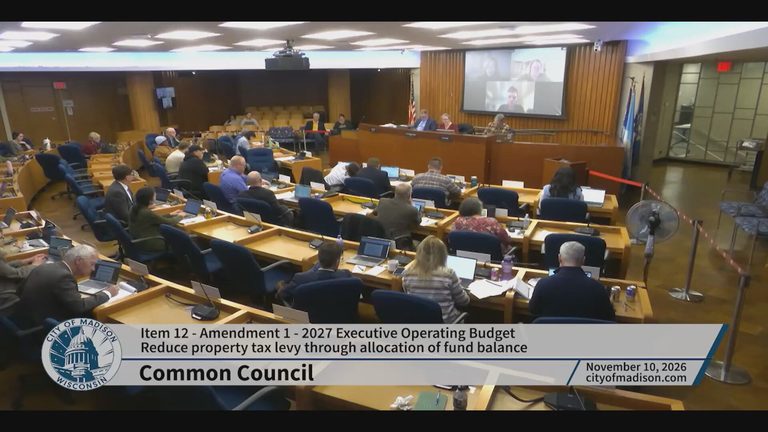
Madison, Wis. – On Tuesday, Nov. 10, the Madison Common Council voted to adopt the city’s 2027 operating budget of roughly $477.7 million, along with a separate capital budget that funds affordable‑housing projects and infrastructure improvements. The vote averts the service cuts that officials had feared earlier in the year.
Tax impact for homeowners
Finance Director David Schmiedicke explained that the average‑value homeowner can expect to pay about $90 more each year in city property taxes – roughly $7.50 per month. That represents a 2.7 % increase over the prior year, which Schmiedicke noted is below the current inflation rate.
While the city’s tax rate is actually declining – dropping from about $7.01 to $6.93 per $1,000 of assessed value – rising home values are driving the higher bill. District 19 Alder John Guequierre said the typical Madison home’s assessed value rose from roughly $481,300 to $500,300.
How the budget stays balanced
Earlier in the year, council members prepared for the possibility of cutting services to save about $2.2 million. Instead, the city identified nearly $1 million in efficiencies, including revised technology purchasing and waste‑disposal practices.
The approved operating budget adds about $200,000 for priorities such as violence‑prevention programs and Vision Zero traffic‑safety initiatives. The capital budget includes a new public‑works facility on the city’s far west side, intended to cut travel time and fuel costs for municipal vehicles.
Financial health and future challenges
Madison’s finances remain relatively strong. The city holds roughly $125 million in reserves – about 28 % of its annual general‑fund spending – a cushion that analysts describe as “a really good position.” However, spending from the main fund is growing at an estimated 5.5 % annually, outpacing the property‑tax levy’s growth of about 3.4 %.
Schmiedicke warned that the gap between revenue growth and spending could create a structural deficit over time. Contributing factors include limited state aid, rising employee compensation, health‑insurance costs, and debt service. The city projects a shortfall of roughly $20 million in 2028, potentially expanding to about $59 million by 2031.
To address future shortfalls, Madison’s five‑year financial plan considers using reserves and special charges, though no new special charges were adopted in the 2027 budget. Council members, including Alder Guequierre, plan to meet with state lawmakers in December to discuss municipal‑funding reforms.
Transit and other pressures
Metro Transit continues to face financial pressure as fare revenue has not kept pace with ridership recovery, which is now near pre‑pandemic levels. State transit funding has been relatively stagnant for more than a decade. To cover operating costs, Metro is drawing on federal funds that can be applied to either day‑to‑day operations or capital projects, though historically the city has used more of that funding for capital improvements.
Overall, the council’s decision reflects a commitment to maintain the services Madison residents expect while keeping tax increases as modest as possible.
Original reporting: NBC15 WMTV (Gray) – local — read the source article.