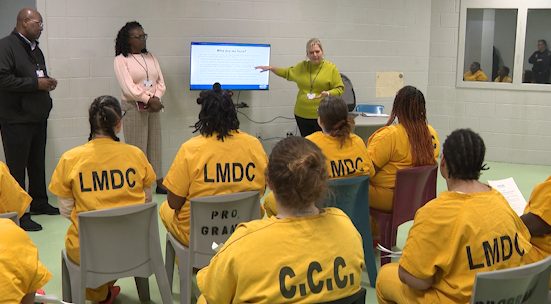
The Louisville Metro Department of Corrections (LMDC) unveiled a pioneering initiative this year aimed at strengthening family bonds for inmates preparing to re‑enter society. Partnering with the state’s Department for Community Based Services, the program brings social workers into the jail to hold informational sessions that demystify child‑protective services (CPS), family‑court procedures and the steps needed to regain custody of children.
Program goals and structure
Offender Services Manager Meagan Kilkelly explained that the effort was born from a clear need: many incarcerated parents lack basic knowledge about their legal rights and how incarceration affects ongoing CPS cases. “People didn’t know what their rights were at all or how incarceration impacted pending or ongoing CPS cases. A lot of times when you talk about CPS, it’s a very scary topic,” Kilkelly said.
After more than a year of planning, the initiative began offering regular workshops to both men and women at LMDC. The sessions provide a non‑judgmental space where participants can ask questions, learn how to navigate CPS reports, and receive referrals to community resources that support child welfare and family reunification.
Inmate experiences
Marcedes Scott, an incarcerated mother of three, is one of the first participants. A graduate of Central High School with a bachelor’s degree in early childhood education, Scott has been separated from her children for two years, one month and a day. “I don’t get to really talk to my kids, I don’t get to see them or know how they’re doing, but, I mean, it’s OK, I know I have God on my side, so I’ll reunite with them soon,” she said.
Scott expressed both hope and nervousness about the reunification process. “Trust, probably, and trying to rebuild the relationship back with them,” she added, underscoring the emotional challenges that many parents face when preparing for release.
Why the program matters in Kentucky
Kentucky has the second‑highest rate of children with incarcerated parents in the nation, a statistic that correlates with adverse outcomes for youth, including lower academic achievement and higher rates of involvement with the child‑welfare system. By equipping parents with knowledge and support, LMDC hopes to break that cycle and promote healthier, safer communities.
“Really giving them the support that they need to connect with their families and build those healthy, strong relationships. We know that that builds a healthier, stronger, safer community,” Kilkelly said.
Looking ahead
The program is the first of its kind at the Louisville jail and in Kentucky. While it was not launched as a publicity stunt, Kilkelly emphasized that the department simply recognized a pressing need. “We worked really hard the last 18 months to bring it in. So we’re very excited that we’ve been able to start,” she said.
State officials hope the pilot will provide data on how best to support incarcerated parents across Kentucky, potentially informing broader policy changes that prioritize family stability and reduce recidivism.
Community response
Local faith‑based groups and family‑advocacy organizations have praised the initiative for its focus on redemption and parental responsibility, aligning with Louisville’s broader commitment to faith‑centered community development.
As the program expands, LMDC plans to track outcomes such as custody restoration rates and post‑release employment, aiming to demonstrate that investing in families yields long‑term benefits for the entire city.
Original reporting: WLKY Louisville — read the source article.