There’s a shelf near the back of Sioux Pottery and Crafts on West Main Street where the pots are still rough from the kiln. Not rough as in unfinished — rough as in honest. You can see the coil work. You can trace where someone’s thumb pressed the clay. That shelf is worth pausing at for a while.
The shop has been part of Rapid City’s west side for decades, run by the Ecoffey family, who have kept Lakota pottery traditions alive in a space that doesn’t much care about being photogenic. The floors are worn. The lighting is functional. The inventory ranges from affordable tourist pieces to serious hand-built work that belongs in a collection. That spread is intentional — it keeps the doors open and keeps the craft funded.
What you’re looking at when you walk through is overwhelmingly locally made. Pots, bowls, storyteller figures, pipes, painted gourds, and beadwork — most of it sourced from Native artists in the region. The staff can tell you which pieces are made in-house and which come from individual artists they work with directly. That knowledge matters. It means you can ask a real question and get a real answer, not a vague wave at a hang tag.
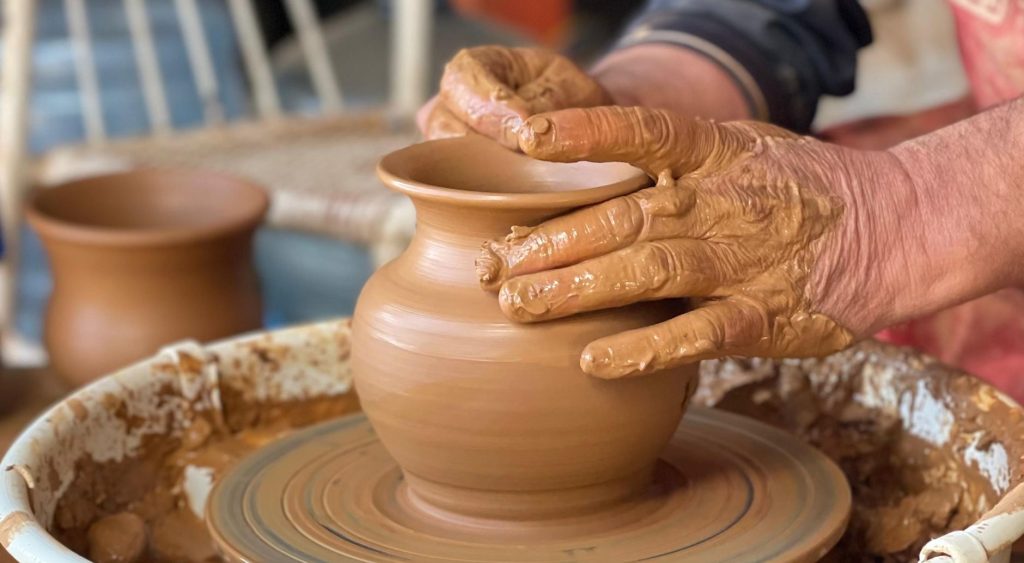
The pottery itself — the coil-built, traditionally fired work — is what sets this place apart from the dozen or so Native art shops scattered around western South Dakota. At Sioux Pottery, the making is still happening here. You might find the kiln in use out back, or catch someone at the wheel during a quieter weekday morning. If you’re curious about the process, ask. The staff isn’t performing friendliness; they actually know what they’re talking about.
Prices range widely. A small decorative pot might run you $15 to $30. Mid-range hand-built pieces with traditional geometric patterns sit in the $60 to $150 range. The more substantial work — large storyteller figures, fully detailed ceremonial pieces — can reach several hundred dollars, and honestly, given the labor involved, that’s reasonable. These aren’t mass-produced imports. If you want something that will still look good in twenty years and means something beyond its price point, this is where to look.
The shop is easy to miss if you’re not watching for it, which might explain why it draws more serious buyers than casual browsers. The sign is modest. The storefront doesn’t announce itself. But locals know it, and so do collectors who come through the Black Hills specifically to pick up work from Native artists they’ve been buying from for years.
Go on a weekday if you can. Weekends in summer get busy, and the shop is small enough that a crowd changes the experience. Give yourself an hour. Walk the whole room before you decide on anything. The piece worth buying usually isn’t the first one that catches your eye — it’s the one you keep coming back to after you’ve seen everything else.
Sioux Pottery isn’t trying to compete with the galleries on Main Street downtown or the trading posts along the highway. It’s doing something quieter and more specific: keeping a practice alive by staying practical about it. That combination — tradition and pragmatism, craft and commerce — is exactly what makes it worth your time.