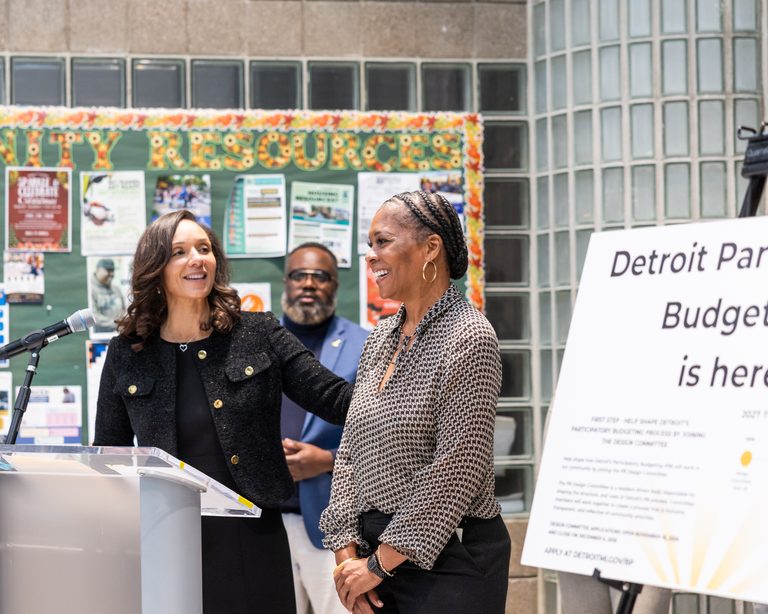
Detroit residents will soon have a direct voice in how a portion of the city’s budget is spent in their own neighborhoods. Mayor Mary Sheffield unveiled a pilot participatory budgeting program that earmarks $250,000 for each of the seven City Council districts for infrastructure‑type projects.
How the program works
Participatory budgeting lets community members propose, refine and vote on capital improvement ideas such as park upgrades, sidewalk repairs, safety enhancements and beautification efforts. The process will unfold in three phases:
- Phase One – Design Committee: Starting Monday, Nov. 16, residents can apply to serve on a design committee that will set the rules, proposal guidelines and voting eligibility. The city will select 16 members who must attend an orientation on Jan. 9, 2027, and meet weekly for five weeks, with additional meetings through March.
- Phase Two – Decision Making: Residents submit project ideas and vote on them. An application window opens in February 2027 for a budget delegate committee that will turn public input into concrete proposals and compile a final project list.
- Phase Three – Implementation: Approved projects move forward in the city’s capital improvement schedule. Public ideas are accepted in May 2027, refined June‑September, and voted on in October 2027.
Applications for the design committee can be submitted at www.detroitmi.gov/pb. City CFO Tanya Stoudemire confirmed the timeline and emphasized that the program is designed to give families, seniors and all residents a tangible stake in neighborhood development.
Community response
Local leaders welcomed the initiative. Mose Primus, president of the Yorkshire Woods Community Organization, highlighted existing assets such as community gardens and a flower garden, while noting the need to address abandoned homes and trash‑filled blocks. “We have abandoned apartment buildings that the city needs to crack down on,” Primus said, urging action against out‑of‑state owners who leave properties vacant.
Ros Haskins and Larry Chatfield, leaders of the Bagley Community Council, praised the overall condition of their neighborhood but called for updated bus shelters, benches and a new public park. They also suggested a Motown‑themed sculpture to celebrate the area’s musical heritage.
City Council President James Tate expects his colleagues to approve the budget item next year. He noted that while the program focuses on capital projects, future phases could expand to include programming for seniors and families.
Council backing
During the previous budget cycle, Councilmember Denzel McCampbell advocated for a participatory budget, emphasizing beautification, park improvements and amenities such as pickleball courts. More recently, McCampbell hosted a roundtable with Cody High School students, gathering ideas ranging from youth‑led lawn‑care services for seniors to a community hub addressing substance‑use disorder, health and homelessness.
The pilot reflects Mayor Sheffield’s long‑standing commitment to empowering Detroit families. “It took a long time to get here, but I’m very proud to announce that under this mayoral administration, residents will now have a direct say in how to dedicate a portion of city funds to their neighborhood projects,” Sheffield said.
What’s next?
If the pilot proves successful, the city may consider expanding the budget allocation or adding programming components in future years. Residents are encouraged to stay informed, submit ideas and participate in the voting process when the windows open.
Original reporting: BridgeDetroit — read the source article.