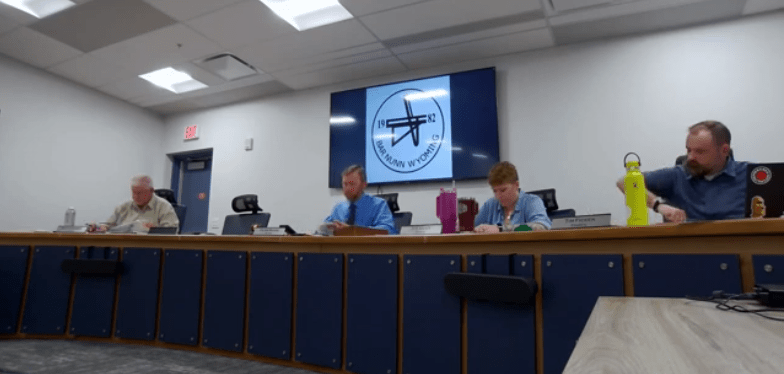
The Town of Bar Nunn, Wyoming, is making strides toward becoming a city, as discussed in the recent Town Council meeting on June 2. Town Attorney Pat Holscher informed council members that Bar Nunn is approaching the population threshold of 4,000 residents needed under Wyoming law to be classified as a city. While the town may have already reached this milestone, the official designation will not occur until the next federal census in four years.
Administrative Changes and Responsibilities
To prepare for this significant transition, the council approved the first reading of an ordinance to amend the town code. These amendments will increase governmental responsibilities for leadership positions, as explained by Holscher. Mayor Peter Boyer highlighted that new requirements for auditing and administrative oversight are key components of the shift from a town to a city.
“There are some differences between first-class cities and towns,” Holscher noted. “We’re trying to anticipate that and bring Title II up to speed so that we don’t have to re-engineer a whole bunch of stuff.” Mayor Boyer added that while immediate advantages may not be evident, the change is essential as the community continues to grow.
Impact on First Responders
Councilman Dan Sabrosky pointed out that costs for first responders often rise as a community transitions to city status. This concern was highlighted during discussions about a recent incident where the Bar Nunn Volunteer Fire Department could not respond to a house fire within town limits. “We’re at that transition from a town to a city, and first responders are expensive,” Sabrosky stated.
Sabrosky also linked the financial challenges of staffing a paid fire department to a missed opportunity with Radiant Industries, which had initially shown interest in building a nuclear microreactor manufacturing plant near Bar Nunn. The plans were abandoned due to legislative hurdles and public opposition. “Not to open an old wound, but we need to be open in the future, and hopefully, we get an opportunity for another large-scale project that doesn’t come with spent nuclear fuel,” he said. “The impact fees from a project that size would have given us a full-time paid fire department.”
This is a developing story, and more information will be shared as it becomes available.
Original reporting: Oil City News (Casper WY) — read the source article.